Category Archives: Hiking

Traverse of the Bigelow Range – Epic

View Traverse of the Bigelows in a larger map

If you’ve spent more than 10 minutes on this website, then you owe it to yourself to visit this place.  The photos, words and other media which follow surely do no justice to the greatness of the Bigelow Range.  But I’m getting ahead of myself.  Lemme take this one from the top…
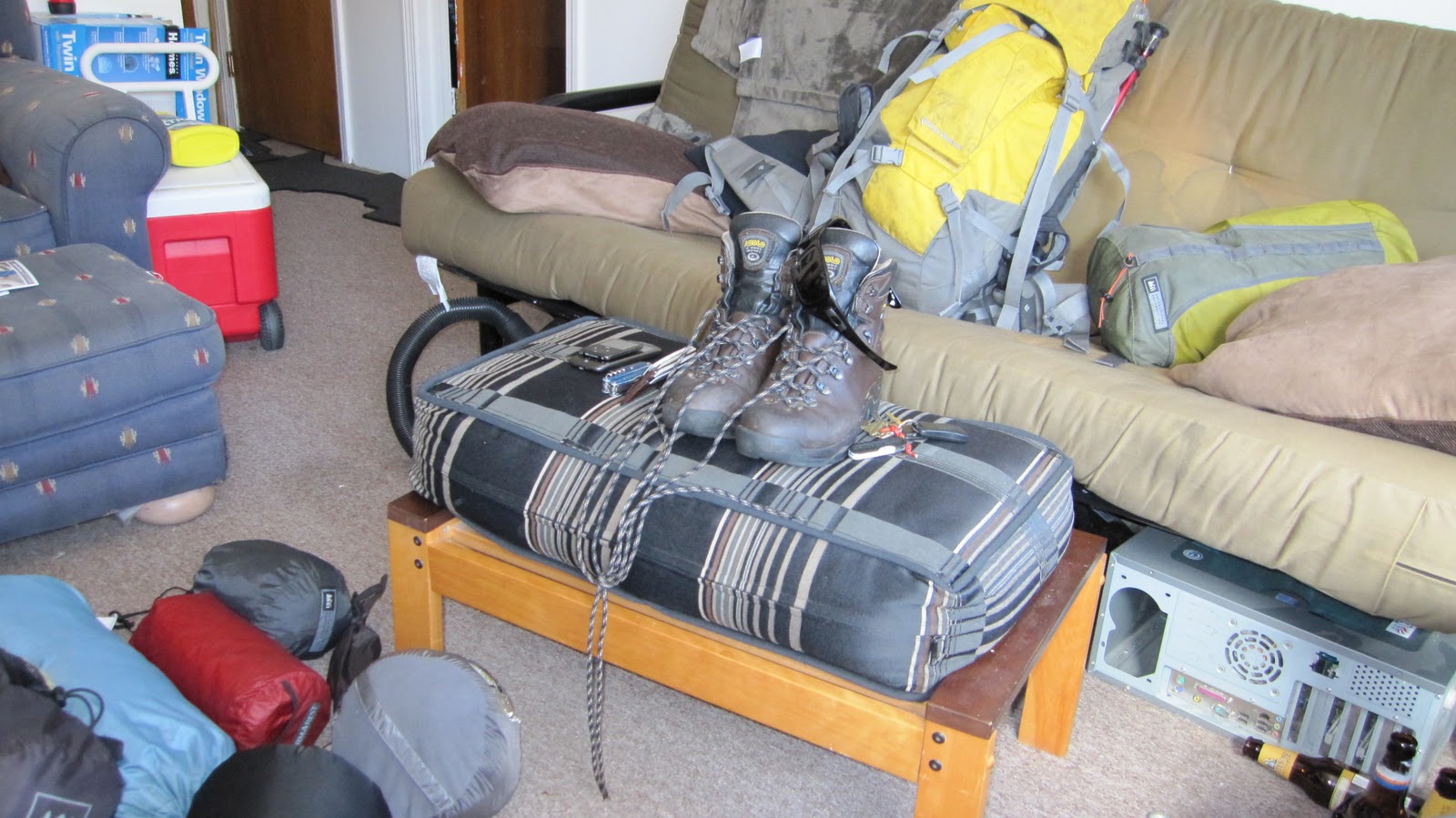
Pre- gear-explosion.


Some of you may recall that the plan for this trip was formulated some weeks ago and only recently were we able to pull it off.  It’s not the longest drive, but from Boston it’s far enough that it requires some planning and some time.  An uninterrupted drive from Boston to Stratton, ME via the scenic route is projected to take 5.5 hours.  Of course there is no such thing as an uninterrupted drive from Boston.  Additionally, it was a perfect October weekend.  Combined with my inability to be out of bed when I had planned to be out of it, we ended up arriving quite a bit later than we had planned: around 10 PM.  The last leg of the trip was conducted after dark which was actually a lot cooler than we thought it would be: you really get the feel that you’re in the middle of no where once you cross out of New Hampshire and into Maine.

Eventually we passed through the towns of Stratton and Eustis which was our cue to begin looking for trail heads and campsites.  The original plan was to crash at a private campground, make a fire, and chill for a few hours before hitting the sack.  Since it was now 10 PM, cold, and windy, and since we were both starting to run out of steam, we abandoned our plans of luxurious camping and settled for more bare-bones accommodations.  We knew there to be primitive campsites along the access road, Stratton Brook Pond Road (a mouthful, especially in the middle of the night when you mostly just want to be sleeping).  After a few passes back and forth along US 27/16 we eventually found our stop: an ill-lit dirt road winding it’s way into the forest.  Some sort of supplemental illumination would have been helpful in finding the place after dark.  About a mile or so down this road we encountered a small parking area with maybe a half dozen cars and no people.  A very small sign seemed to indicate that no vehicles were allowed past this point. We briefly contemplated hiking our camping gear the rest of the way to the primitive camp sites, but opted to stay put.  It seemed harmless.

View Traverse of the Bigelows in a larger map

At only about 1000 feet and mostly in the cover of the trees, the wind was astonishingly strong!  We actually put our tents between the woods and the car to break the wind, and even still we were afraid the howling winds would keep us up.  By now it was into the mid 30s so we scrambled to get our shelters up.  Upon completion of these activities we bundled up, cracked a few beers and had a lengthy look at the Milky Way, which neither of us had had the good fortune to see in quite some time.  Around 11 PM we set our alarms for 5:30 AM, got into our tents and crashed.

When we crawled out of our sleeping bags the stars were still out, the wind was still howling and it was still about 35 degrees.  Nothing like outright adverse conditions to get yourself fired up for the day!  We tore down our camp in record time, tossed it all into the back of the car and set off down the road in search of the trail.  Shortly, we found the AT, which comprises most of the hike.  The few miles of the hike are essentially flat and we maintained a decent pace, all the while catching the sunrise.  Shortly after passing Cranberry Stream Tentsite we start to gain some vertical.  The foliage becomes decidedly coniferous.  The forest itself is really interesting, full of glacial errata, and moose-friendly looking lowlands, wetlands and ponds.
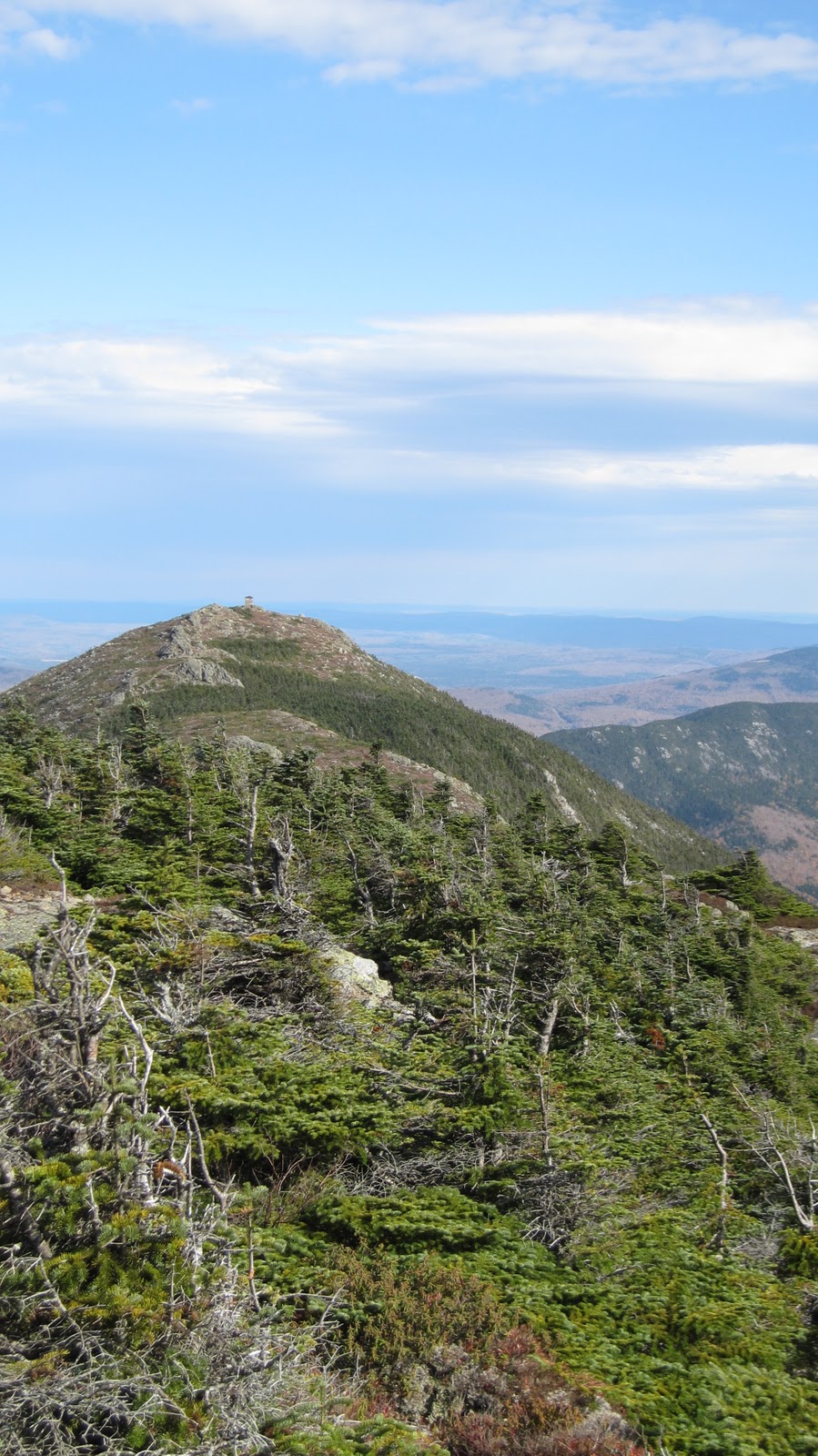
The knife edge.

It’s important to note that the Bigelows are essentially a knife edge.  In order to get to the top you really have to make some pretty steep ascents.  Fortunately, just as soon as you’re ready to take a break you encounter something cool to look at.  Along the ascent we pass Cranberry Pond and Horns Pond, both of which are at elevation.

Me and Tripp getting lost in the woods seems to be a recurring trend at this point, but nevertheless I’ll take this opportunity to point out some confusing signage which led us about 2 miles out of our way: just prior to encountering Horns Pond, there’s a fork.  Just be sure you go the right way – the inset map has more detail.
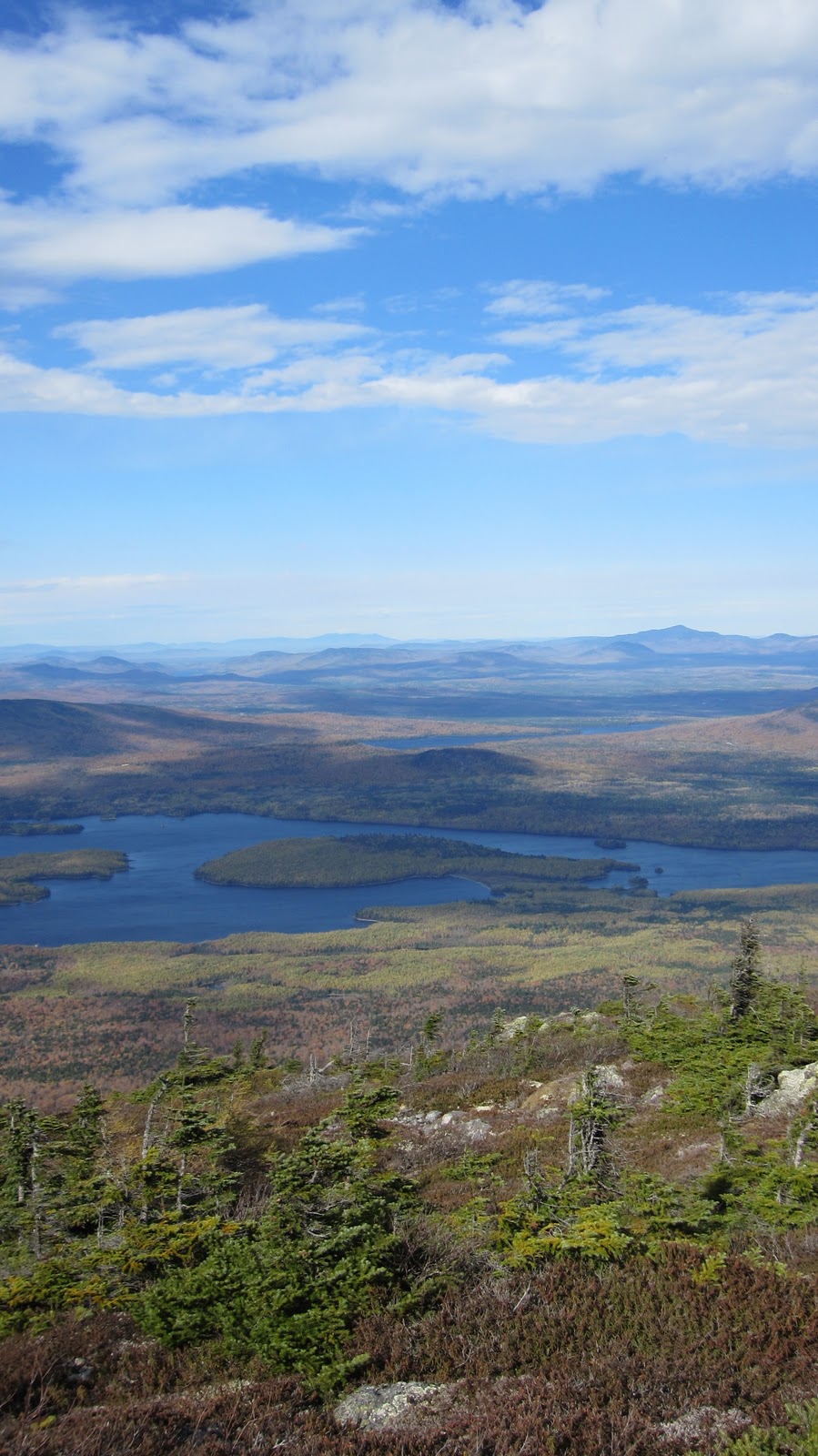
Flagstaff Lake from North Horn.

Anyhow, we eventually realize the error of our ways, and get back on track.  Right around now is when the fun begins!  The summit of North and South Horns are within a few hundred vertical feet and the wind has only intensified since we’ve started.  Once we reach North Horn (highly worth the brief detour) we have to shout to speak to each other.  The wind is blasting out of the Northwest probably around 50 mph.  It’s sunny and in the high 30s though the wind chill is significantly lower.  Tripp finds a fortunate clearing in the trees just below the rocky summit where we decide to eat and drink.  It’s out of the wind enough that we can lower our voices, but it’s still pretty cool, so we head off to the South Horn as soon as we’re done eating.
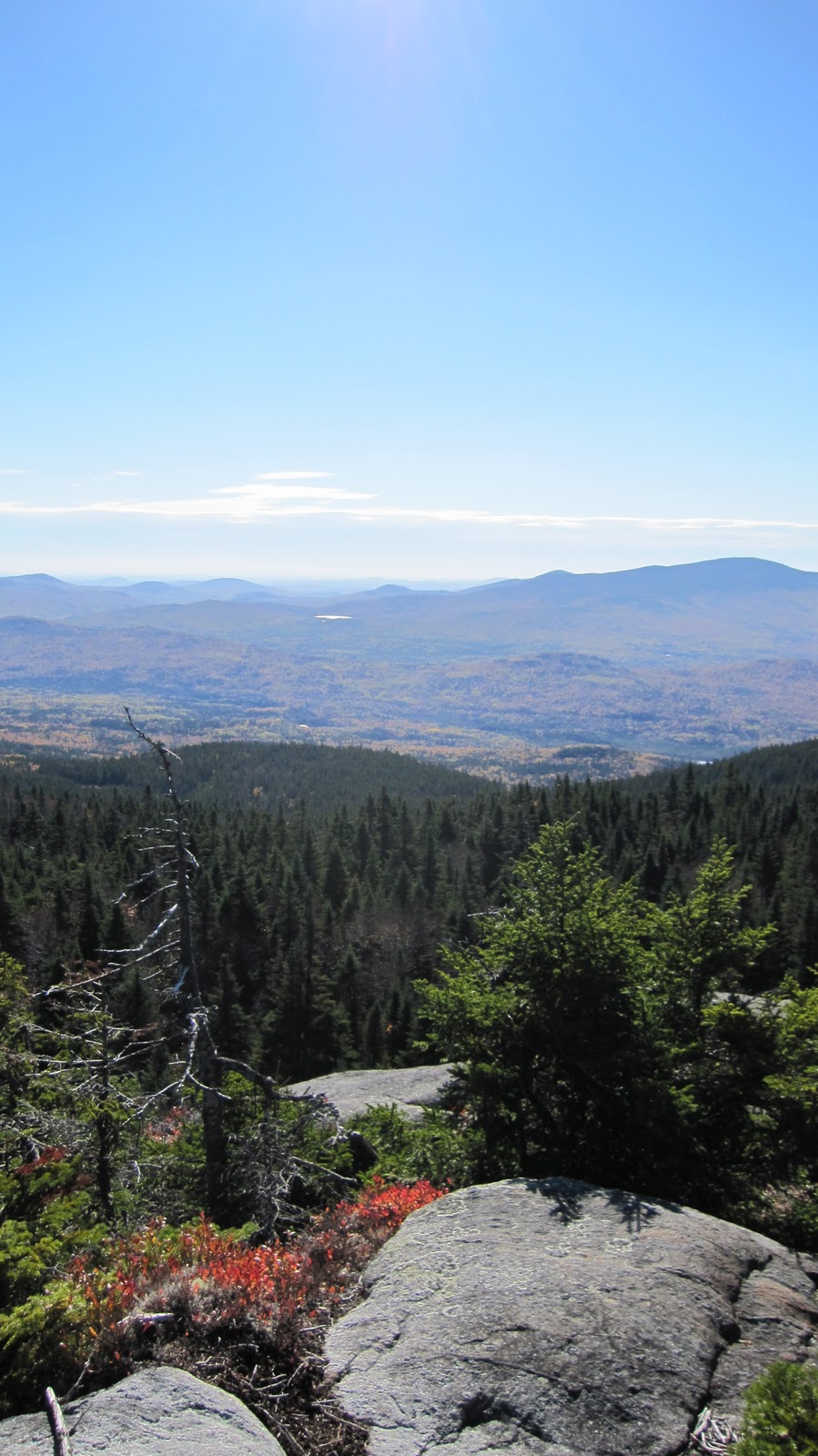
The South Horn might was well have been a beach resort by comparison: a small crowd is relaxing on the warm rocks, out of the wind and in the direct sunlight.  Were it not for the fact that we had just stopped… well you get the idea.  It was really nice.

Moving along, we descend into the saddle between the Horns and West Bigelow.  For a while we’re out of the wind, but as we get closer to the middle of the saddle, and eventually start to head up again we’re buffeted by winds of increasing strength.  Eventually we’re completely out of the lee of the Horns.  The forest around us shows the signs of constant exposure to strong winds: seemingly every other tree is knocked over toward the south.

As we get closer and closer to West Bigelow we get glimpses of the ascent to come.  It’s a craggy and rocky peak.  It’s totally exposed.  As we emerge from the treeline the wind kicks into high gear, meanwhile Tripp and I steady ourselves for the last few hundred feet.  It’s not technically demanding, but it’s intimidating.  Between the constant gusts of wind and the precipitous nature of the route it has a perilous feel to it.  We summit, have a quick look around and decide to get the show on the road, something we notice just about everyone has done as well.  It’s an awesome peak, but not really a place to relax.  We descend down the a few hundred feet to the Fire Warden’s Trail at which point we leave the AT and make our way back toward Stratton Pond Brook Road.

View Traverse of the Bigelows in a larger map

By this stage of the game we’ve covered some serious ground (upwards of 10 miles), hit 3 peaks, and been up since 5:40 (it’s now past 6 PM).  Having said that, I almost completely spaced out for the descent and don’t really remember any of it.  We catch a few glimpses of Stratton Pond as well as the road where we left the car.  Eventually we get to the bottom of the mountain and back to the road.
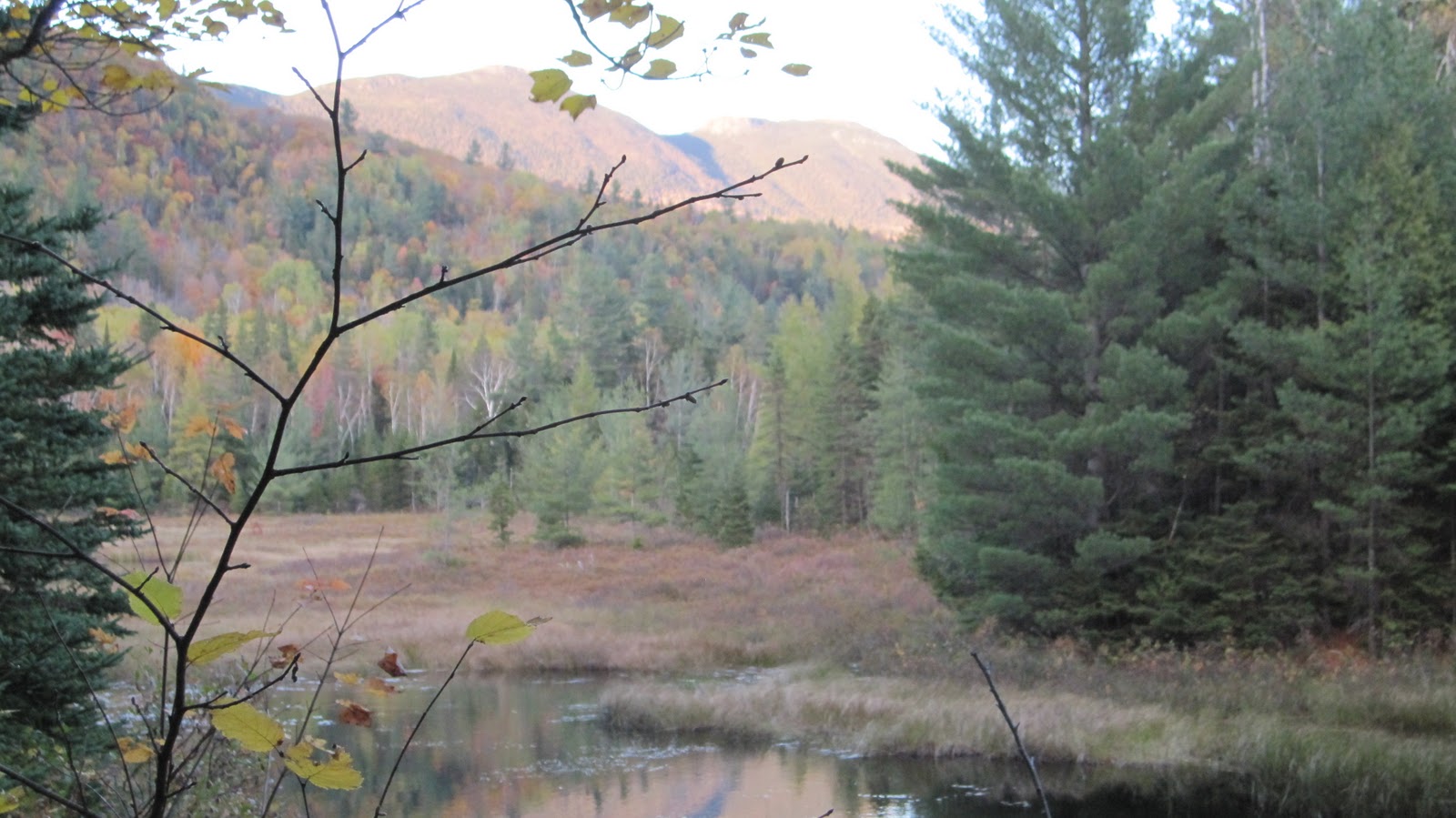
Out of focus but good colors!

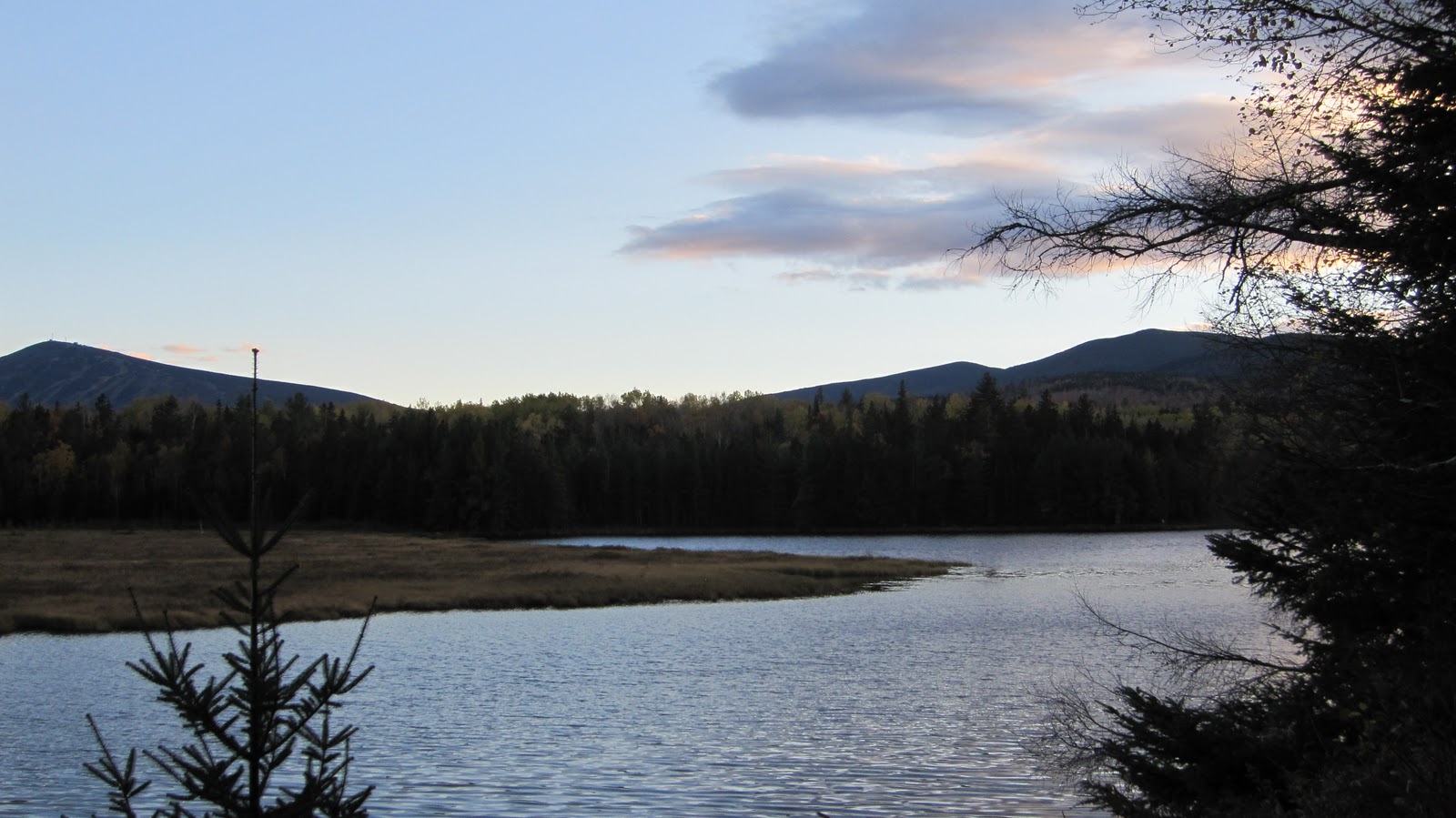
Sugarloaf and the sunset.

The road is actually a lot longer than the map would seem to indicate – it runs a fair distance in to the woods and terminates at the pond.  Around the area where the road terminates are plenty of parking spots and camp sites, many of which overlook the pond, the Bigelows and Sugarloaf.  The legality of all of this is somewhat up in the air and I think I’ll just need to write some emails to get to the bottom of it all, but assuming it’s legit, these would have been excellent spots to camp, with fire pits, great views and easy access to the trails.  Shortly down the road we found ourselves back the the car, where we packed up and headed home.

View Traverse of the Bigelows in a larger map

At the end of about fifteen miles, we wrapped things up and hit the road.  It was a long challenging day, but how often can you say that caught both the sunrise and the sunset?

Gear List (click links for more product info):

Asolo TPS 520 GV Boot - Men'sBlack Diamond Trail Trekking Pole Cinnamon, One SizeSmartWool NTS Microweight Bottom - Men'sKUHL Trek Short - Men'sMSR MiniWorks Ex Water FilterMountain Hardwear Sprite 1 Tent 1-Person 3-Season Humboldt, One SizeMountain Hardwear Compressor PL Pant - Men'sMountain Hardwear WindStopper Tech Vest - Men's Sapphire / Black, MFree Shipping on Orders over $50

Mt. Mansfield

Another New England classic, Tripp and I decided to hike Mansfield last weekend. The weather turned out to be excellent with almost no clouds at all and temps in the mid 60s. We got up at the crack of dawn, drove up via I93 to I89 and hit the trail at 11 AM. There are numerous parking areas in Smugglers Notch, providing easy access to the trails.


Conceptually, this hike can be split into three really distinct parts: the ascent (red), the traverse (green), and the descent (orange). Now this statement may appear less than profound, but when broken down and examined it becomes clear.  In my opinion, it’s this feature of Mansfield that makes it such an interesting hike.  There is great variety during the course of the day, leaving you with a distinct sense of having accomplished quite a few different things.  Here’s a quick overview of the route (Note: this map has a lot of detail which is best viewed by following the link below each inset):


View Mt. Mansfield in a larger map

We ascended via the Hell Brook Trail, one of the steepest hiking trails in New England (at least that I’m aware of). Just for reference, it took us about 3 hours to summit and it’s only about 1.5 miles from the parking area to the summit.  I was somewhat under the weather, which only compounded the problem.  Here’s a closer look:


View Mt. Mansfield in a larger map

The first leg is really the hardest part of the hike, which if fortunate because after the first excruciating hour, things only get better.  You basically ascend up a steep watershed hallmarked by step like boulders and well worn tree branches and stumps giving evidence to the numerous hikers who’ve hauled themselves up practically and over hand in the past.

Nearly half way are two points of interest (the blue push-pins).  The lower one denotes a spot that looked good for an emergency bivy, although you’re so closed to the road that it may not really be of much worth.  The second (uphill) pin is extremely confusing.  I’ve done this hike twice and each time we loose the trail in that very spot!  There are numerous tributary water sheds that run across and parallel to the actual trail.  In this case I think what happened, is that the trail hooked to the left, while a small water runoff ran straight down hill and into the trail.  In our beleaguered state, we waltzed right off the trail into increasingly dubious terrain before realizing that this arduous slog over fallen trees and ill marked trail is actually not the trail.  Actually we were only off of the trail for like 30 or 40 yards, but since it’s happened twice now, I thought I’d make a note of it.

The second leg of the ascent mellows out by quite a bit.  Around this time, you begin to get some previews of the views to come.  Eventually you come to Lake of the Clouds, which is more of a pond, and on this particular day there were no clouds…  In any event it’s nice.  Here the trail splits giving you the option of heading over Adams Apple or circumventing it and heading straight for The Chin.  Both routes are equidistant while Adams Apple gives you a gain of several hundred feet.  The view is worth it: you get a good look at the final real ascent of the day:

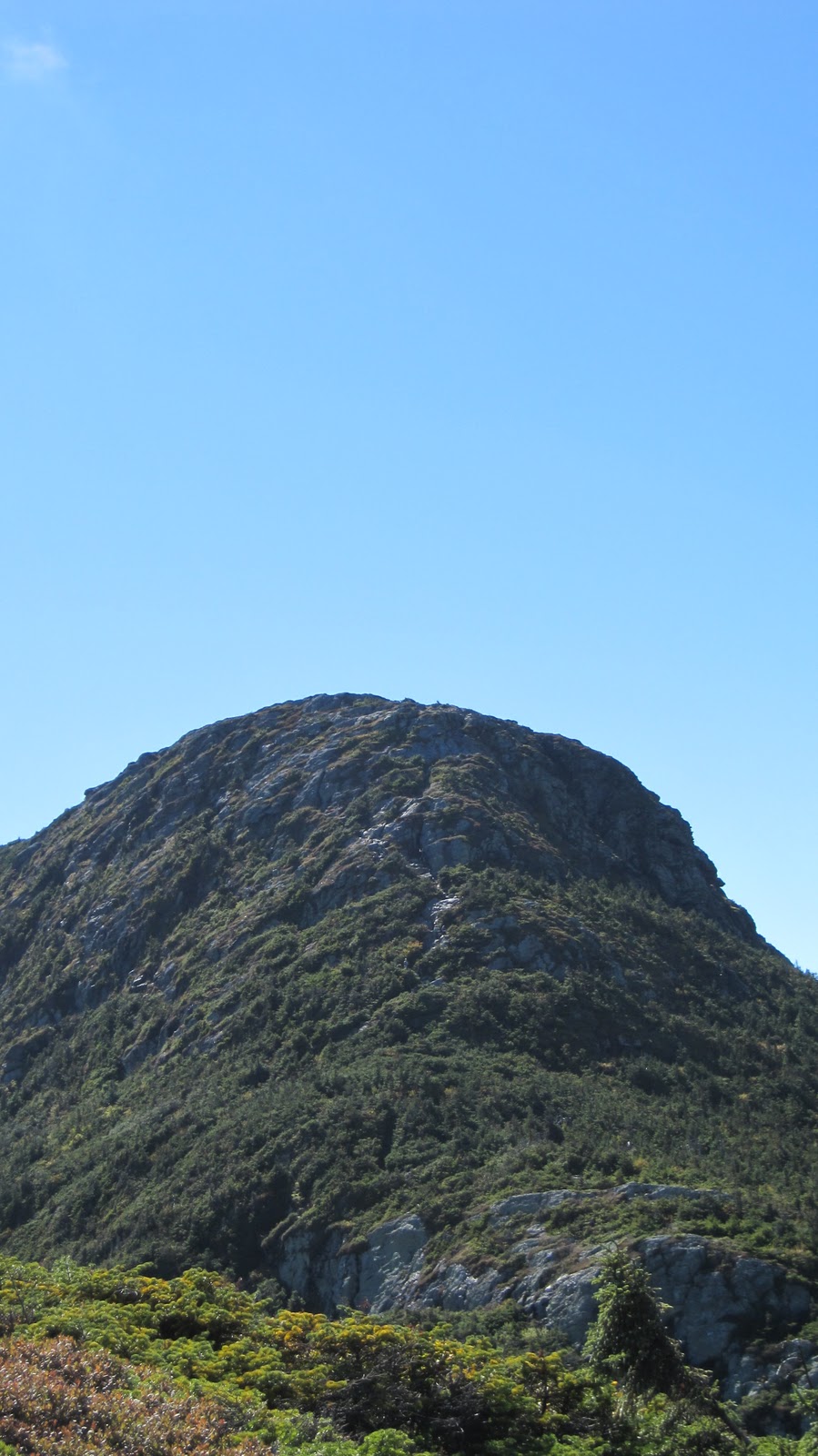
The Chin – the squirrelly notch up the middle is the trail!

This ascent is up there with other great (non-technical yet precipitous) New England climbs such as Flume Slide Trail or Huntington Ravine Trail.  The route up is less than obvious for much of the way simply because it’s so steep that you can’t see  very far from your present position in either direction.  For example:

About half way up the Chin ascent.
We’re standing about half way up the Chin ascent; the trail descends more or less over that cliff.  It’s basically the same story in the uphill direction!  Shortly you arrive at the summit of Mansfield, reminiscent of other high peaks in New England: bare and rocky punctuated by swirling winds, and also loads of people.  It’s incredibly beautiful, on par with the likes of Franconia Ridge.
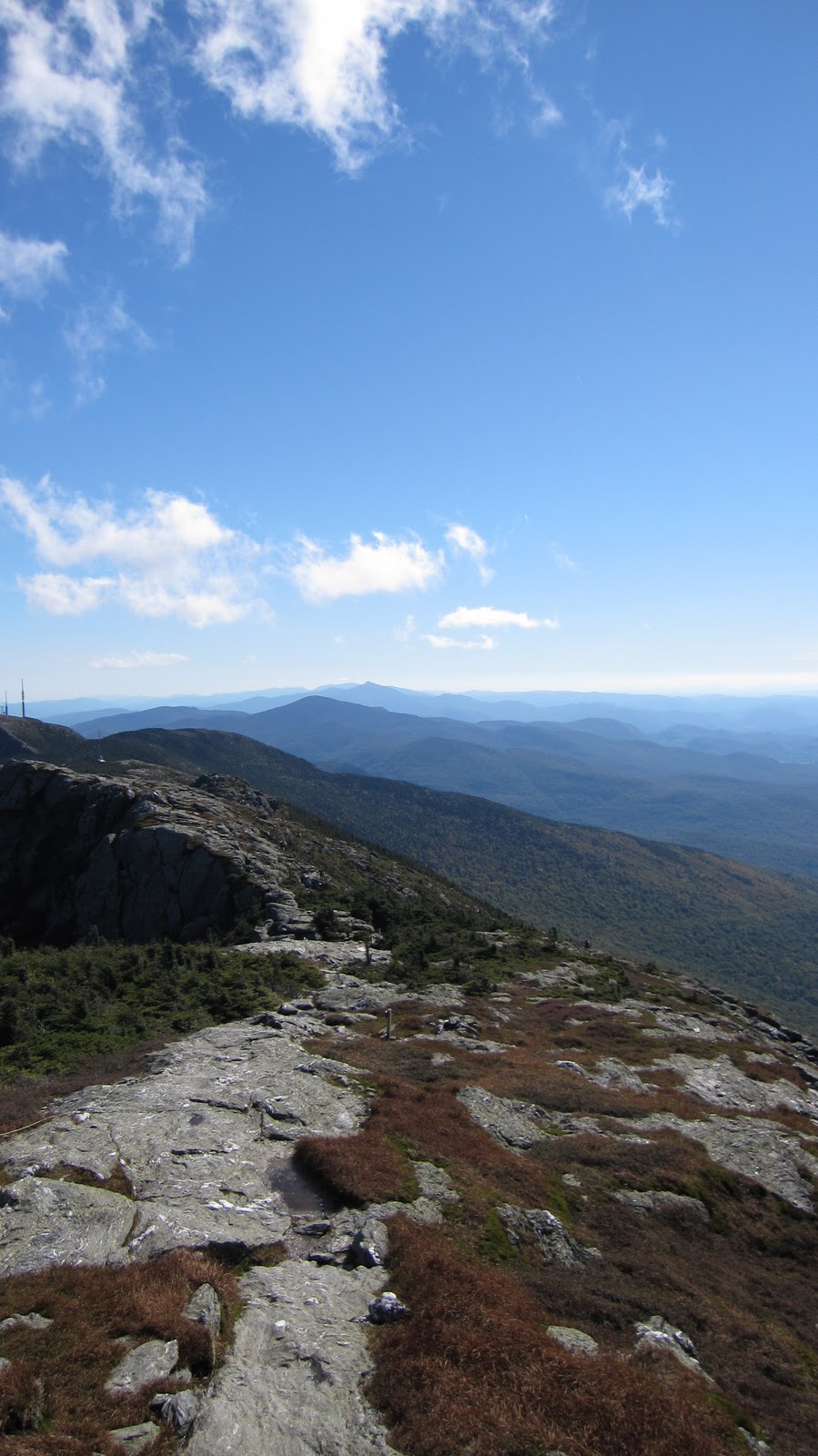
Looking south from Mansfield.
There are several ways to traverse the ridge.  Last time we did this, we opted for the Cliff Trail on the eastern side of the ridge.  Cliff Trail basically cuts across the cliff which is the eastern face of Mt. Mansfield.  There’s almost no elevation change but it falls away sharply to one side making it a precarious and exciting stretch.  One section of the trail actually has a steel cable anchored into the rock which climbers can use as a hand hold as they cross the steepest portion.  Last time we were there one end of it had torn out and it was unusable.  The Long Trail runs along the top of the Ridge, however the Stowe gondola generates an incredible amount of foot traffic along this stretch.


View Mt. Mansfield in a larger map

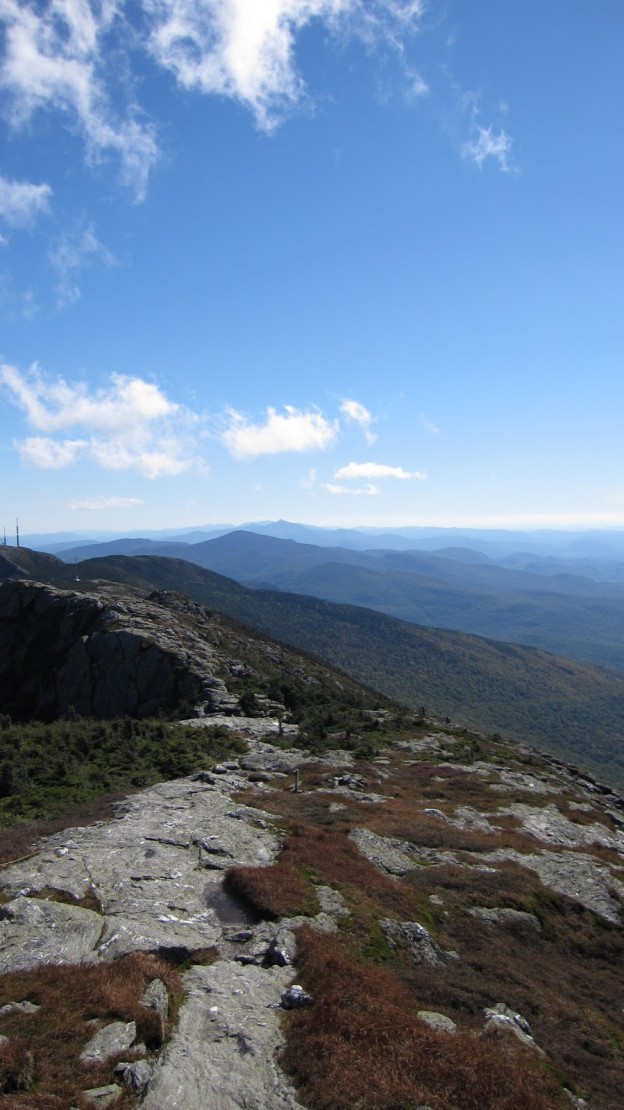
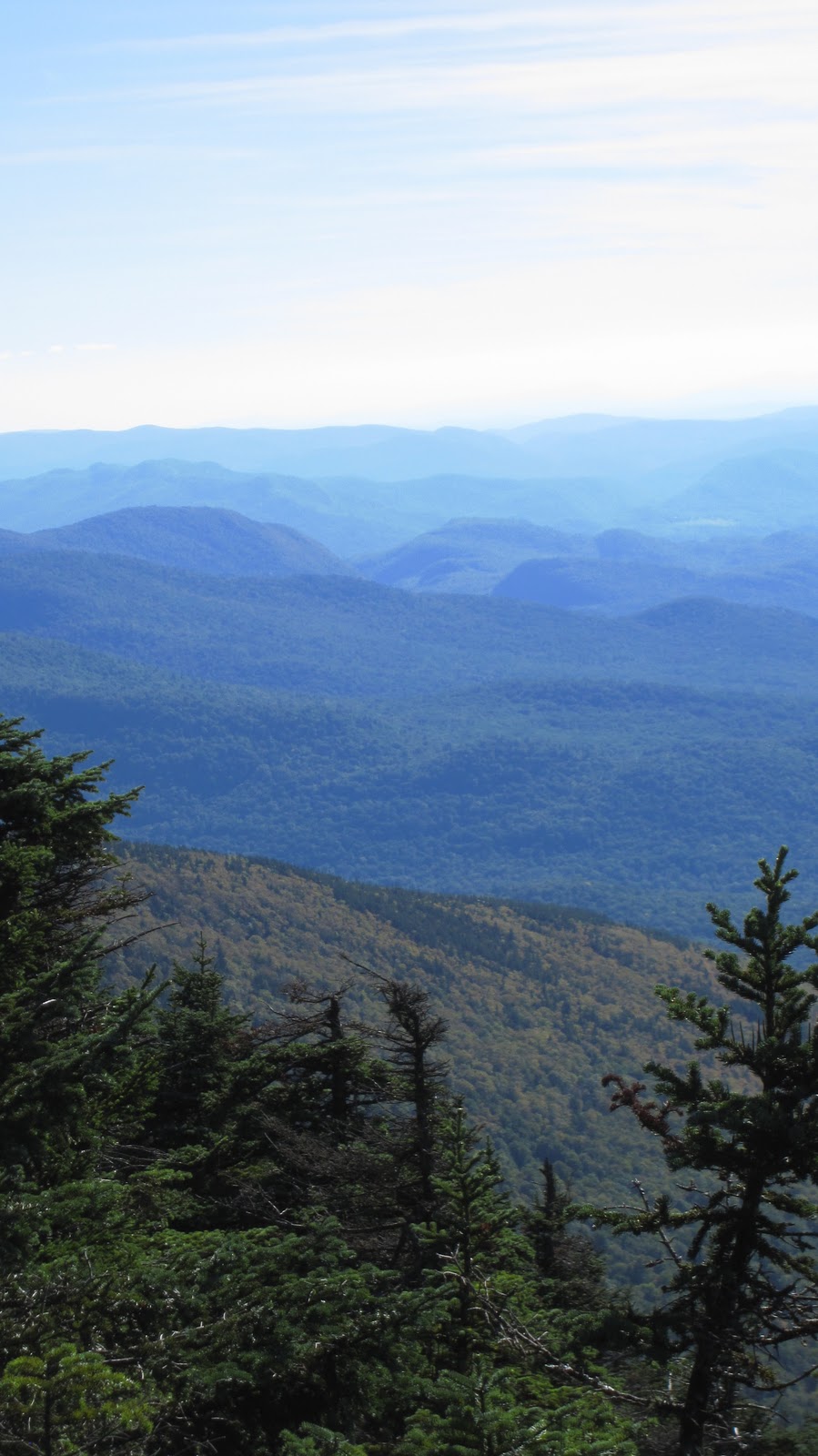
In order to avoid the beltway-esque congestion we descended to the southwest and picked up the Subway trail and Canyon Trail.  This forms what amounts to the western analog to the Cliff Trail: an exposed traverse along a rocky face.  On the eastern flank you get views of Smugglers Notch, the ski areas and the White Mountains in the distance.  On the western flank you get the Vermont country side, Burlington, Lake Champlain and Adirondacks.  A few shots from the Canyon Trail:
Canyon Trail – Champlain and Adirondacks in the distance.
Southwest facing.
Canyon Trail.  Facing south looking
over the Green Mountains.
Burlington, Champlain and the
Adirondacks.  Facing east from
Canyon Trail.
Upon exiting the Canyon Trail, you find yourself back on the ridge proper, and at the foot of The Nose, the last feature that you encounter before descending.  By now it was late in the day, so we decided to omit the Nose and head down the mountain.


View Mt. Mansfield in a larger map

The easiest descent is by way of the Toll Road.  The Toll Road is dirt road which winds it’s way down from the ridge, past the ski area and finally back to Mountain Road, which provides access to the skiing and hiking.  As far as roads go, the Toll Road is a pleasant hike.  There is not really any traffic and it offers several great views of the valley.  It’s also pretty easy hiking.  At several points the road intersects with parts of the ski area.  At our first opportunity we dodged off the road and went straight down the ski area.  There is a hiking trail which descends through the ski area (which would allow you to avoid the ski trails) but it was getting late so we went straight down a trail called Nose Dive.  As you might expect this dumps you out, only about a mile from the where we left the car.
A look back at where we’ve just come from.  The gondola station is seen just underneath the cliffs (of Cliff Trail infamy).
Anyhow, the reason this tends to be satisfying hike, is because of the hugely diverse terrain.  You start by parking in tiny lot in the middle of Smugglers notch after a lengthy car ride, crawl up a lush deciduous forest and suddenly emerge onto a craggy ridge.  Shortly after, you find yourself in a precipitous pine forest followed next by the dirt road and capped off by the meadowy slopes of the ski area.  Now I’ve gotta see about doing this in the winter!

Epic Fall Ridge Walk

The plan: drive to Stratton, ME the coolest way possible, set up camp some place chill, kick back for the night and hit the trail early for a traverse of the Bigelow Range.  The Bigelow Range is due north of Sugarloaf and is in fact where Sugarloaf was originally slated to be cut, however some civil engineers dammed up a river and created Flagstaff Lake where the base village was supposed to be.  This nixed the ski resort plans and they picked Sugarloaf instead, but I digress.  My point: Sugarloaf is awesome, so if the Bigelows were Plan A of that whole endeavor, they really must have something going for them.  I gotta check this out.  Details…


View Best Possible way to Sugarloaf / Bigelow Range in a larger map


The trip there could be 35 minutes faster but I figure as long as were gonna be in the car for 5 hours we may as well have a good view for nearly the entire way and take the scenic route: through and past the White Mountains and then dodge east into Maine, past Umbagog and Rangeley Lakes and finally through Stratton, ME, and into the Carrabassett Valley.


The hike itself is alleged to be one of New England’s “great ridge walks” according to 100 Classic New Hikes.  The idea is to ascend from the southwestern flank of the range, traverse east a ways and then descend along the southeastern flank.  From the bottom we’ll need to hike west along a dirt road back to the car but for not more than a mile or so.  I can hardly imagine being anything short of awesome.  Observe:


View Best Possible way to Sugarloaf / Bigelow Range in a larger map
Bigelow Range from the north with Sugarloaf in the semi-distant background.


Hopefully this gets under way next weekend.

Moosilauke

Here it is, short and sweet…

Moosilauke is a nice hike, not too challenging, but plenty substance for a solid day followed by some refreshments (which is exactly what we did, by the way).

The hike begins at the Dartmouth Outing Club lodge; getting from there to the correct trail head is mildly confusing due to high number of trails originating at that spot.  A good AMC map is helpful, here.  The first few miles are quick going, with little elevation gain, and a few pleasant stream crossings.  Shortly after you begin to gain any serious elevation (around 3000 ft.) you are treated to one or two south easterly vistas.  Around 4000 you encounter the only real steep part of the ascent, a series of tight switchbacks punctuated by notably wind-stunted trees.  Before long you emerge above the tree line.

I can’t say for certain, but it seems that the bald summit of Moosilauke is more a result of it’s exposure to the wind and jet stream weather than it’s height, a phenomenon common in many of the Whites’ higher peaks.  In fact, I find that this summit was remarkably similar to that of Washington and it’s neighbors: alpine meadows, scrub brush, scree and wind!  Fortunately there is no train station, parking lot or visitor center.  At the summit, the remains of a cabin provide discrete shelter from the wind; all that’s really left are a few corners of the foundation.  It was a beautiful day, and as a consequence it was crowded.  The views to the east are nice; Franconia Ridge is the most prominent and easily identifiable landmark.

After chillin’ at the top for a while we headed south west down the Carriage Trail; allegedly where the backcountry skiing is done.  The trail is comparable to the Sherburne Ski Trail leading down from Tucks, but a bit longer.  There’s no headwall but it looks like a solid option in the event that conditions elsewhere are unfavorable.  The walk down features a pleasant pine forest, is pretty easy and can be done very quickly.


View Larger Map