At long last, my Jeep is fixed!

Although I’m withholding final judgement–the beast is fixed!  Anyone who knows me knows I’ve had problems with my 1995 Jeep Grand Cherokee Laredo 4.0 6-cyl for what seems like ages.  It’s been having issues (well, one issue in particular) since at least fall of last year. I’ve only owned the car for 5 years now, and I didn’t want to give up on it just yet–most of the time it ran great.

Fixing the car was definitely an adventure involving a lot of research, trips from Boston to Autozone and my parents house to work on the car in their garage.  I also had it in a shop a few times for minor part installs, in hopes they would have a solution.

Get ready for a  long winded account of how I fixed it.

The problem

Last fall, my car started randomly “stalling” while I was driving–and it’s an automatic.  This would happen at any speed, in any gear, at completely random intervals.  For awhile I was completely stumped, sometimes I’d go an entire trip without a hitch, sometimes it’d be stalling left and right.

(If you’ve happened to find my site searching for a solution to this stalling issue, skip down to the solution heading.)

Eventually I had to start telling my friends, “hey, if my car stalls while we’re driving, don’t worry about it, it just happens sometimes.”

I did some routine maintenance stuff and cleaned a few parts, but even after reading countless posts on Jeep forums, I didn’t know where to start–it could be any number of things, for example, my Jeep computer could’ve gone haywire.

I took it to a shop, and they had no ideas.  It was definitely an esoteric Jeep specific problem.

The arduous process

I then decided I’d have to figure it out myself and do the fix, rather than have a shop throw parts at the car and be charged premiums on parts and labor.

I started reading Jeep forums about similar issues–a lot of them.  Whenever I had some time I’d try all sorts of keywords to locate someone who had my problem.  There was tons of information on the internet, especially since Jeep owners in particular seem to love to tinker with their cars.

In the meantime I started replacing things that needed to be swapped out of my almost 16 year old car, and also tried a few parts that were my best guess from what I’d read.

I did a bunch of stuff, starting with simple tasks like cleaning the battery posts and throttle body. Eventually I replaced pretty much the entire ignition system–ignition coil, wires, spark plugs, distributor cap & rotor, and the cam shaft sensor.  The spark plugs were worn, and the coil was cracked so it was good to get new parts in there.  I changed my fuel filter and oil filter.  I had the map sensor, o2 sensor, and coolant temperature sensor changed.  I cleaned the IAC sensor, eventually changed it, then changed it back.

None of this fixed the problem, although it did help the car.  It took a number of weekends to swap out the parts.  Whenever I had a free day I’d go home and do just a few parts, since I didn’t want to install too many new parts and not be able to test the effect of each one on the car.

The solution

One part that kept being mentioned online was the Crankshaft Position Sensor, or CKP / CPS as I’ve seen people refer to it.  At first I ignored looking at it, because it was one of the more expensive sensors, changing it involved becoming a contortionist (as one Jeep owner put it), and it wasn’t always the fix.

What the sensor does is magnetically determine gaps in the teeth of the crankshaft disc, and use the output voltage as an aid in the rest of the engine’s timing to control emissions.

Eventually I ran out of other ideas, and so I bought a Duralast Crankshaft Position sensor. Not to ruin the suspense, but if there’s one thing I learned while replacing this sensor, it’s this: Don’t Ever Buy Duralast Sensors for your Jeep.  In fact, I plan to avoid Duralast if at all possible in the future. You’ll see why in a moment.  I read warnings from other Jeep owners on the forums, but figured I’d be fine.  I was wrong.

A few months ago I replaced the old Jeep CKP sensor with the Duralast one.  It took awhile.  The youtube video I watched said you needed to remove a bracket in front of the CKP bolt to get it at.  Nothing is ever as simple as it sounds on an older car–this bolt and bracket were completely rusted together.  Also, as I found later, you don’t need to remove this at all.
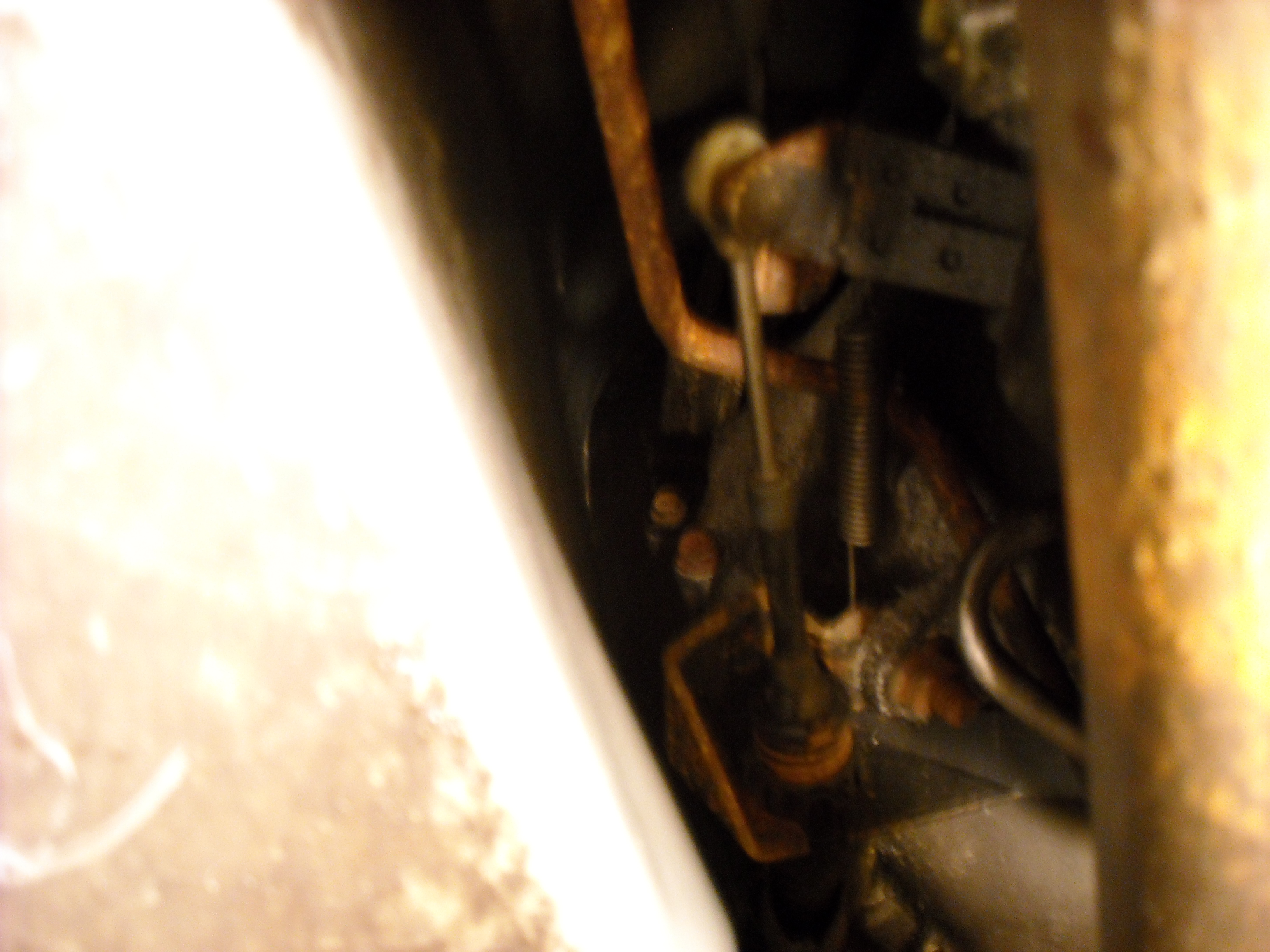
View from under my Jeep

View from under my Jeep. The Crankshaft sensor is held in by the top bolt that is in the middle of the photo, and it goes into a slot on the right.

The results was this:  the car no longer stalled (great!), but every 15 minutes or so in a cycle it would buck and miss and stutter and have no power when you try to accelerate.  It was even less drivable.  It actually took me awhile to link the change in the symptoms back to the new part, I think I just couldn’t believe that a brand new part could be faulty.

At this point I was desperate.  I was so sure the new sensor was going to fix the issue, and now instead I had a new problem!  What the hell.

The right part for the job

I redoubled my efforts on searching Jeep forums until I found a few threads that convinced me the Duralast part wasn’t going to fix the car, I needed a real MOPAR original Jeep part.

My Dad managed to swing by a nearby Jeep dealer, since of course I was stuck in Boston without a working car.  He picked up a new sensor, and I came back on the train to do the install, a trip which was quickly becoming routine.  I pulled the CKP out again, much quicker this time, only to discover that I had the wrong MOPAR part! I couldn’t believe it.  The Jeep parts department at the dealer swore to my Dad it was the right one.  Instead I had a harness for a Cherokee…not a Grand Cherokee.

This weekend for a third time I pulled the part, and finally swapped in the new (correct) one.  After about 2.5 hrs of driving, I haven’t had an issue.
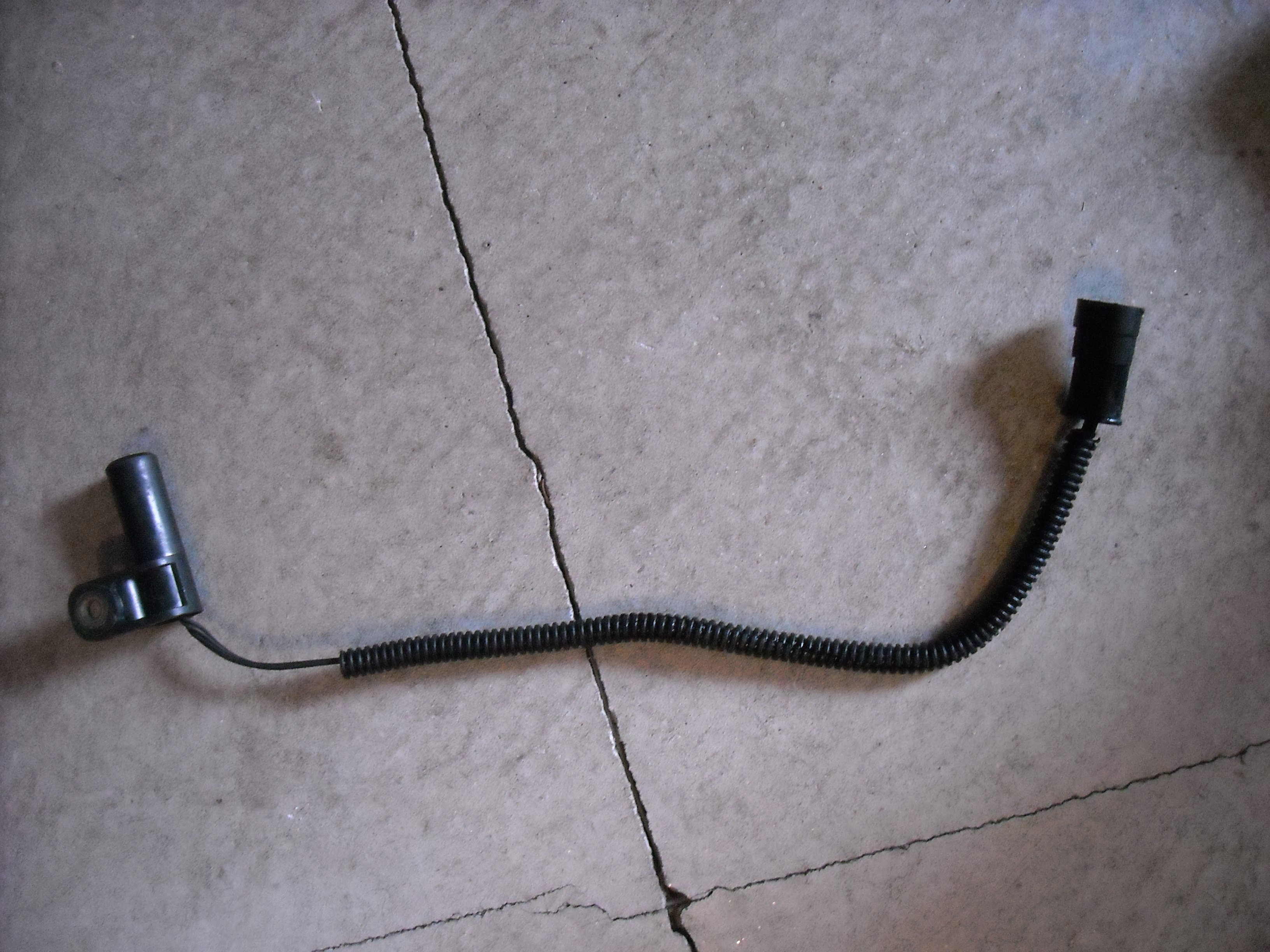
The offending part

The offending part. The crankshaft position sensor.

This week I should finally be able to call my Jeep fixed, and not have to worry about repairs for awhile.  It’s been a long road to this solution.
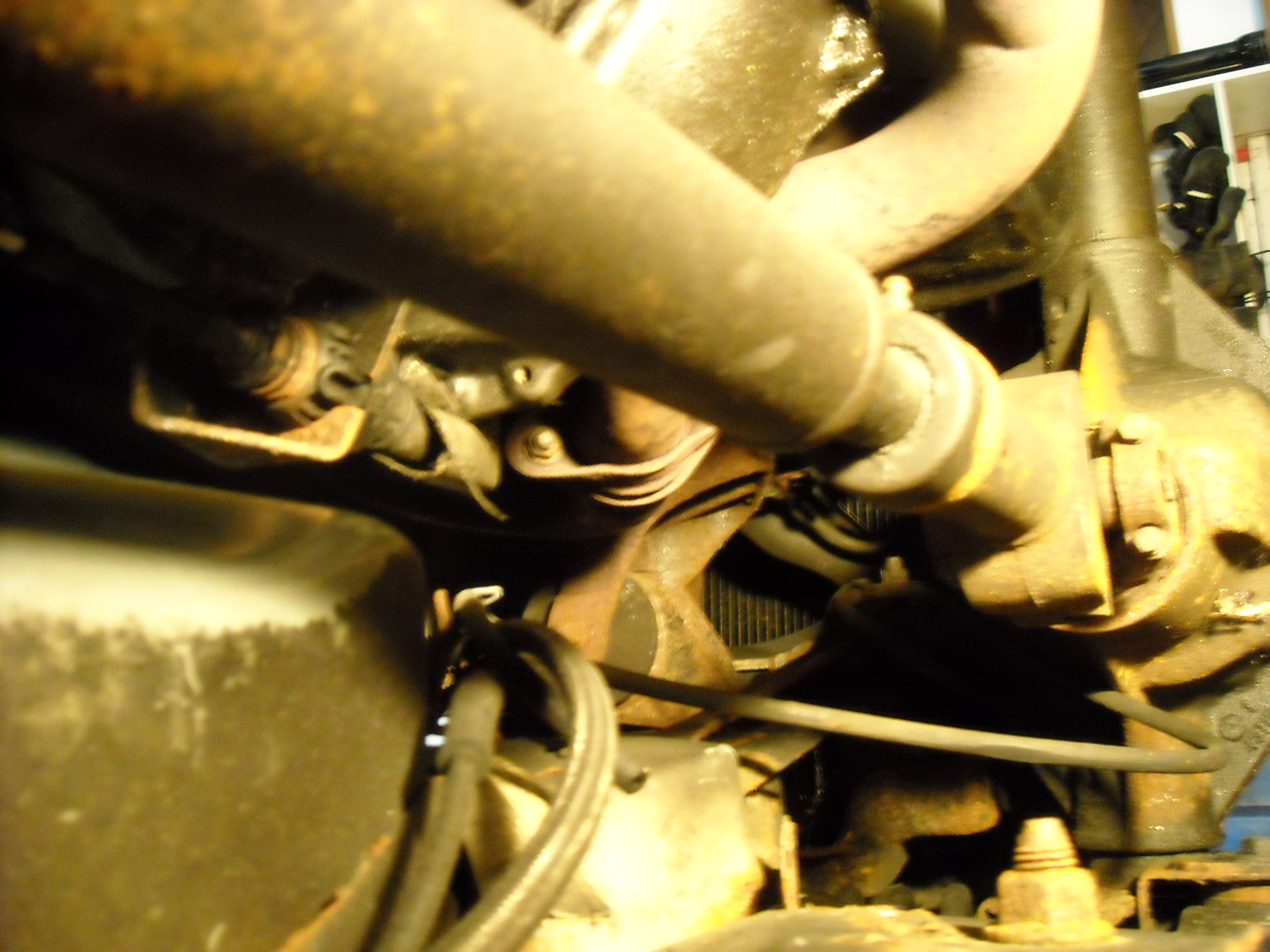
The underside of my Jeep.
The underside of my Jeep.

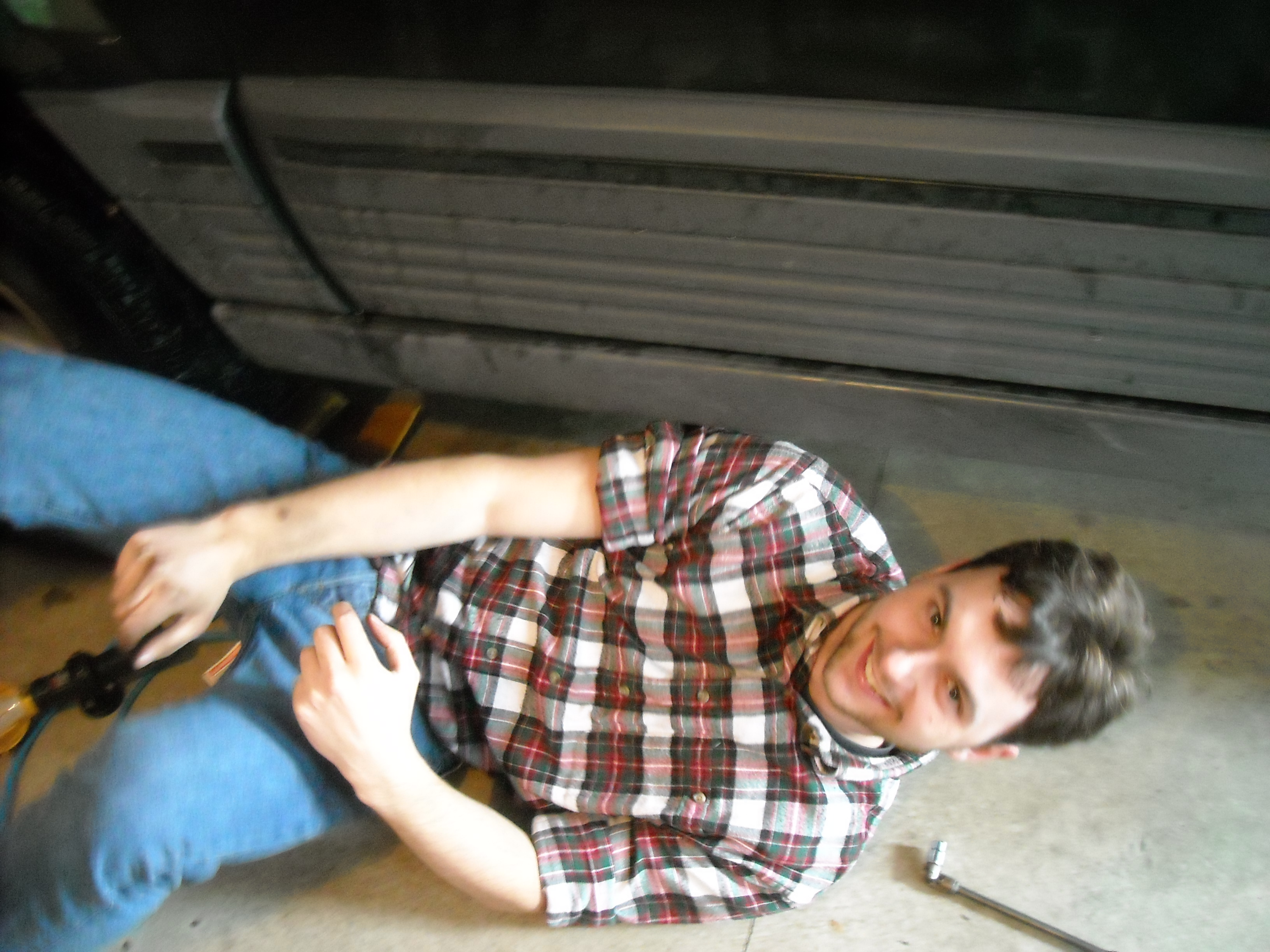
Getting out from under the car after the succesful repair.

Getting out from under the car after the succesful repair.

This repair wouldn’t have been possible without the help of my Dad and his expansive tool set, nor the countless posts on similar Jeep problems from various Jeep forums.  If anyone finds this page who has the same problem and wants any information, feel free to contact me.
Quincy Quarries Morning Climb

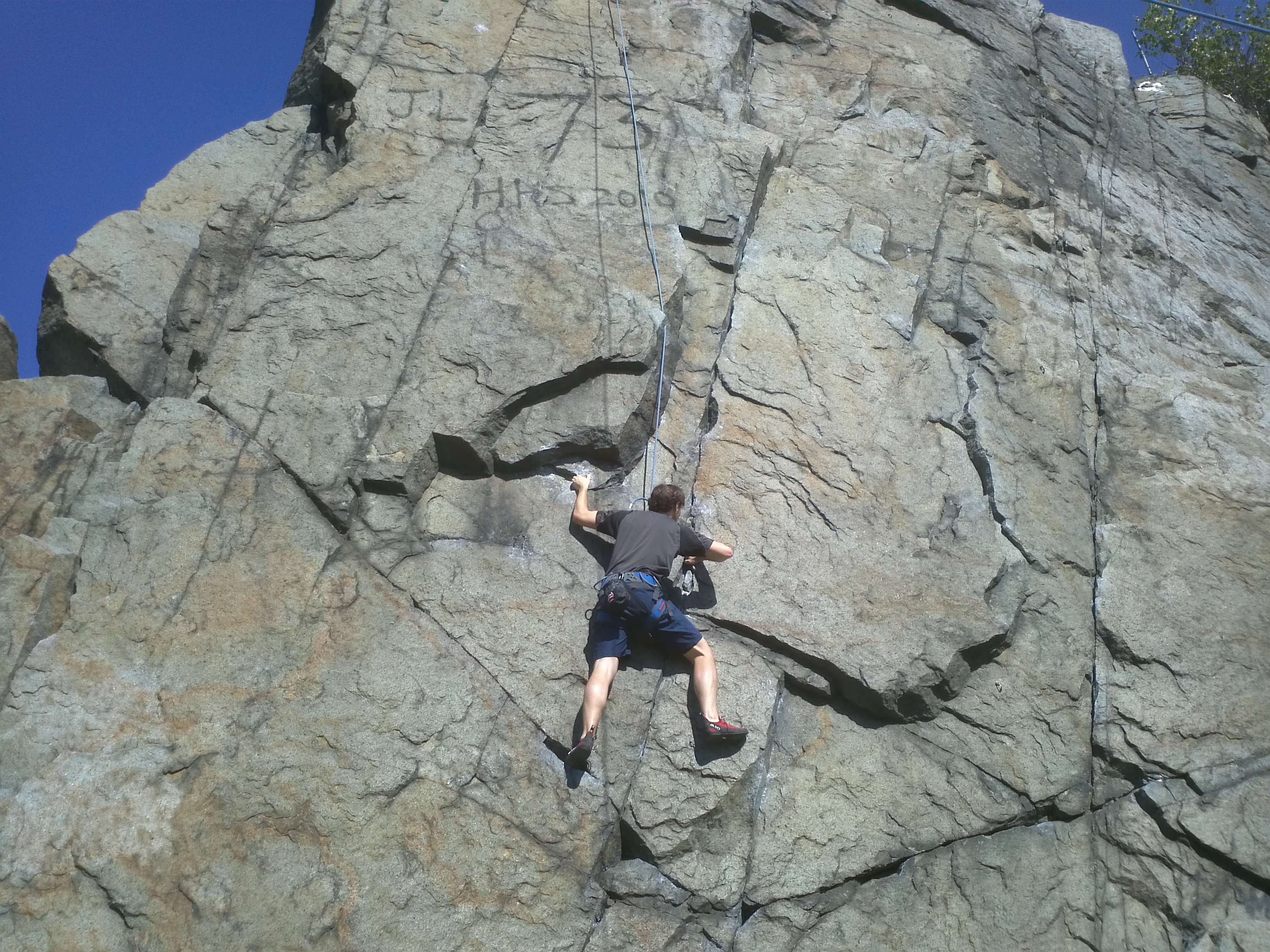
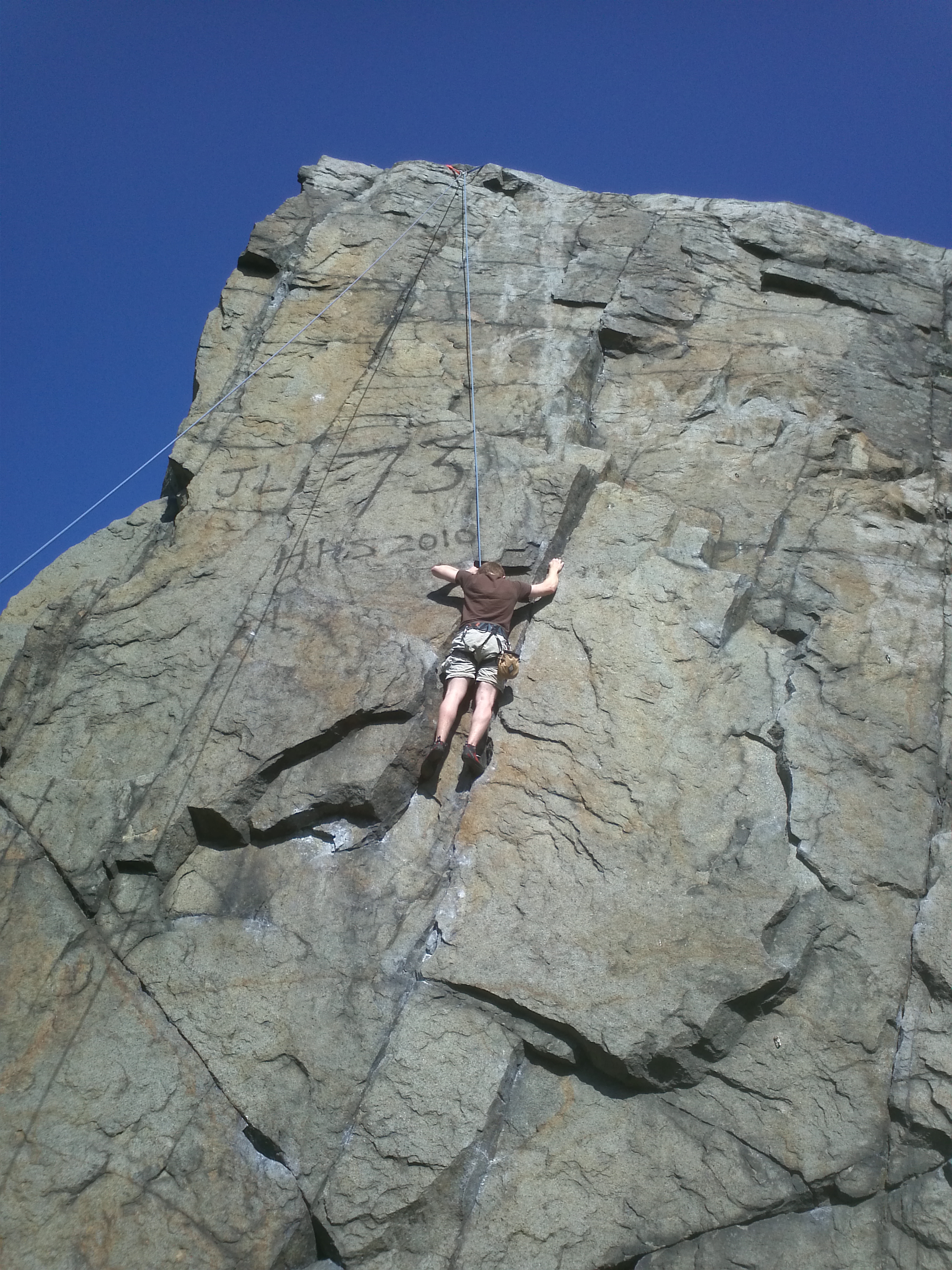
This Sunday around 7 am I drove down to the Quarries with my friend Sukes, only our second time climbing outdoors this year.  My friend Dwight biked down to meet us, and after our usual stop at Dunkin’ we were on the wall with our anchor set up by 8.  It was Dwights first time climbing outdoors, luckily he had a decent camera on his phone, since I’d forgotten mine.

We were top roping, basically the only type of climbing I’ve experienced so far.  This winter I got some quick draws, a rope and a helmet to use at Rumney later this season, but we’re still getting warmed up right now.

But first, a little history

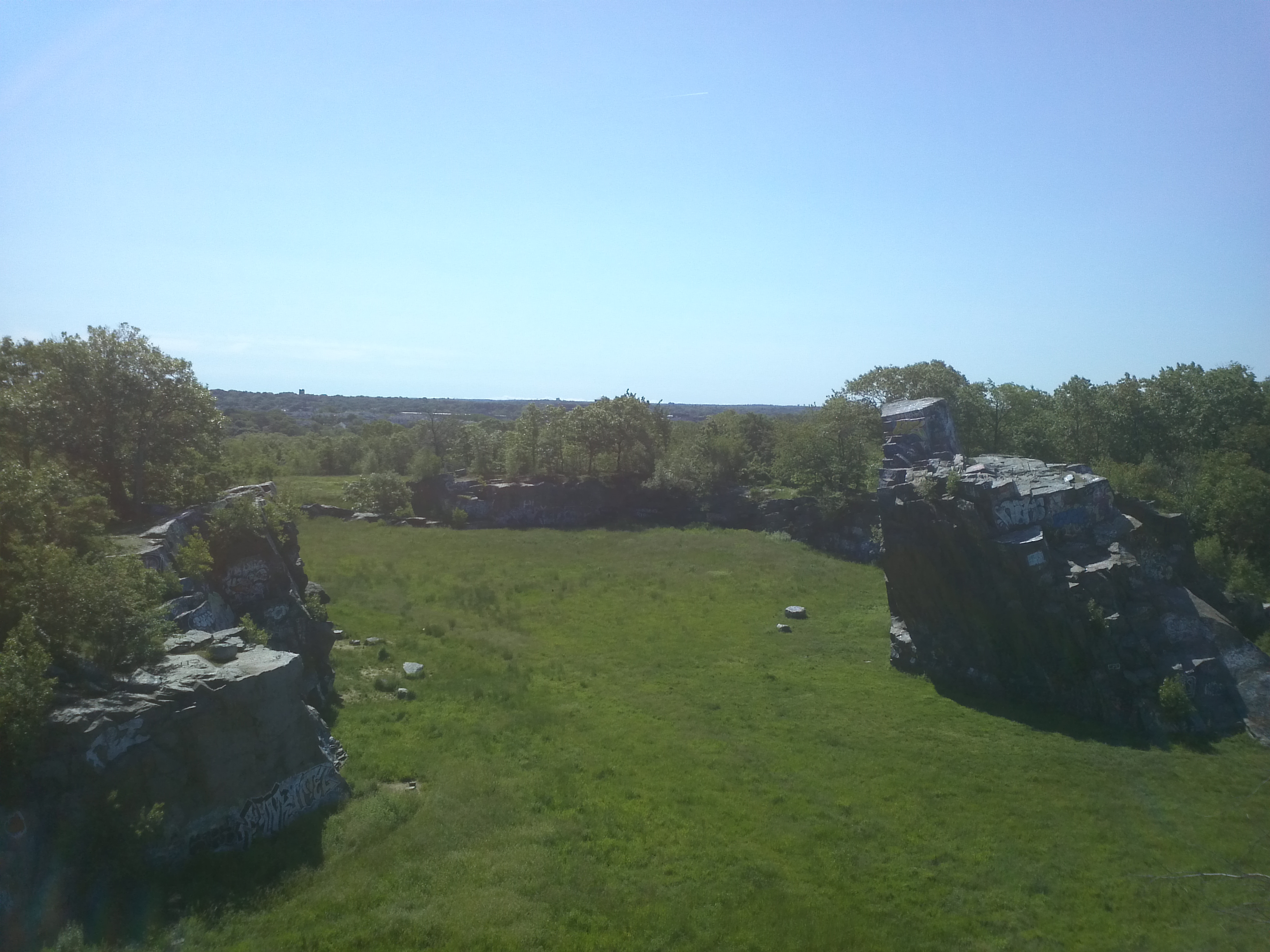
One of the interesting things about Quincy Quarries is how much it’s changed in the past 10 or so years. As with any area, the rock itself has changed, but the Quarry today looks much different than how it is described in a guidebook I picked up in Acadia, called Rock Climbing New England.  Before the big dig, the Quarry was about 20 feet deeper, some of it was on private land and fenced off, and a much greater portion was filled with water.

The Quarry

The frontside of the Quarry. Credit: Dwight's phone.

Today the once 70 foot walls have been filled in with dirt from the big dig to reduce the cliffs to 50 foot climbs, and the private land has been opened up allowing access to a few more walls.  Almost all the routes in my guidebook look radically different.  Since I’m new to climbing, I only know the Quarries in the state they are today.  There are some convenient anchor bolts on top of cliffs you can scramble up in sections.  A good portion of the Quarry is covered in graffiti as well which can make starting holds slippery.

First pitch of the day

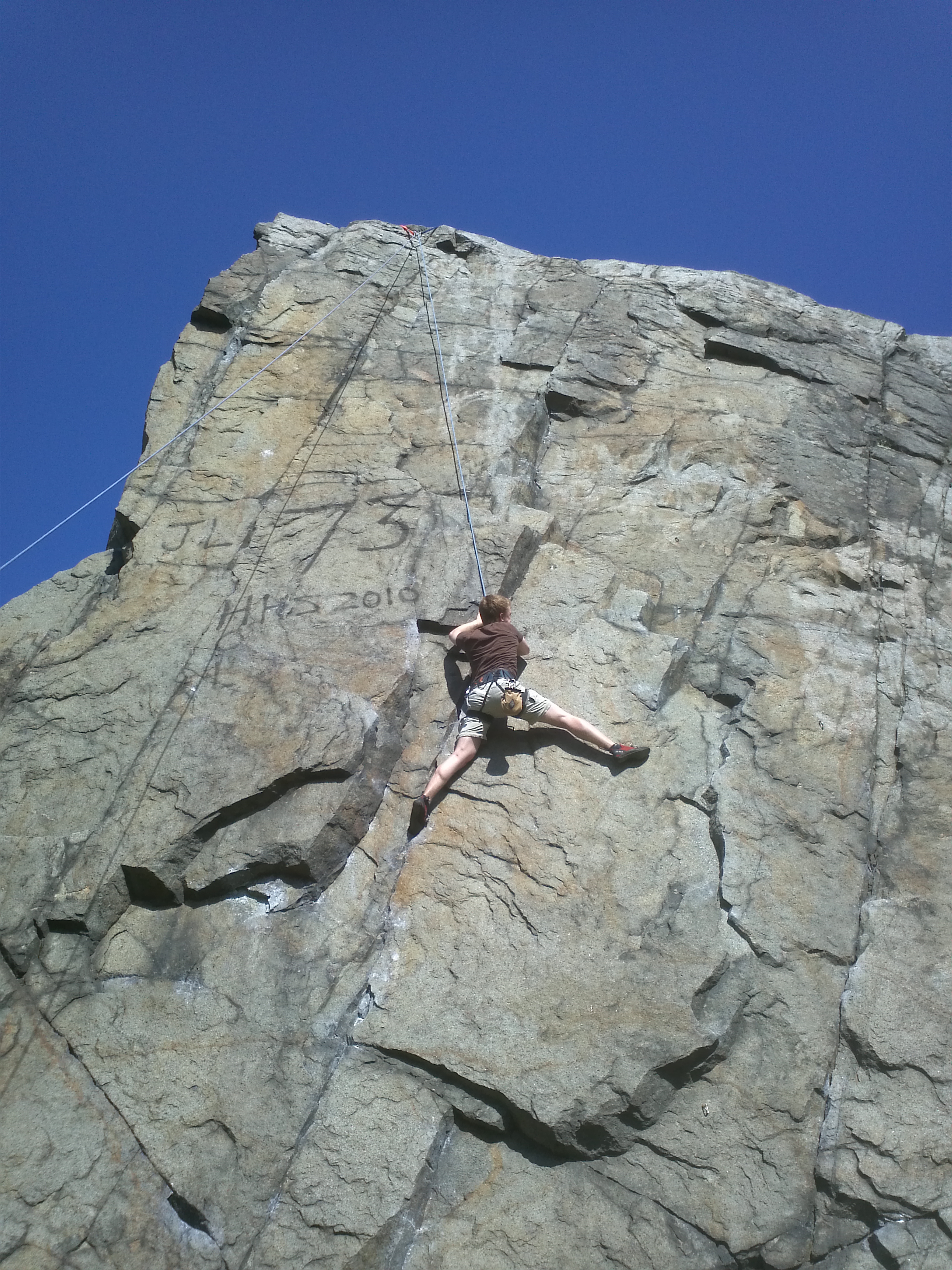
Since we haven’t looked into the new route descriptions much, we don’t always know what a routes agreed rating is, which can be fun, and sometimes frustrating.  A few weeks ago Sukes and I were climbing with our friend Mike on some new routes for us, and I hadn’t made it up the harder one, so that’s what Sukes and I set on first.

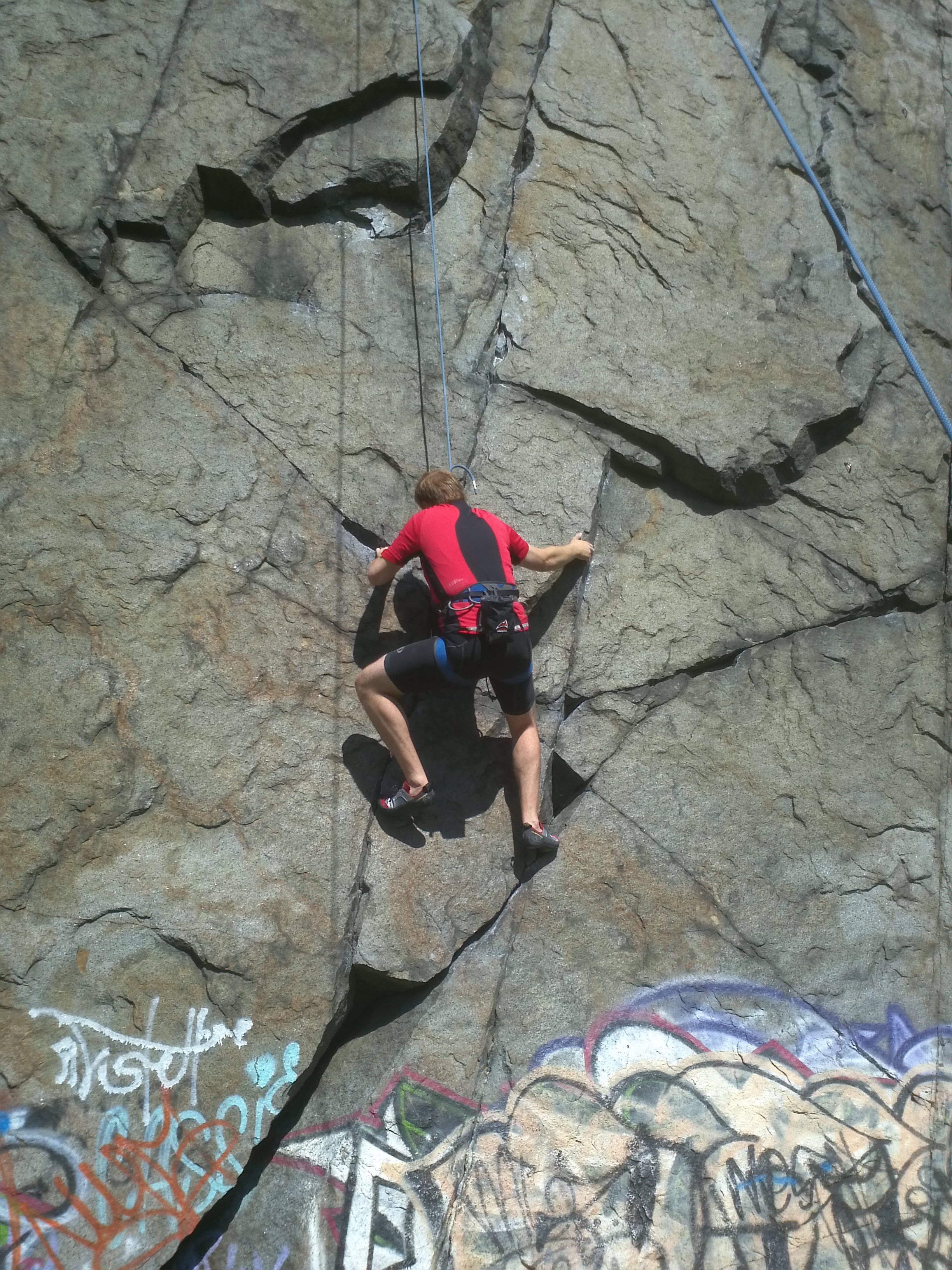
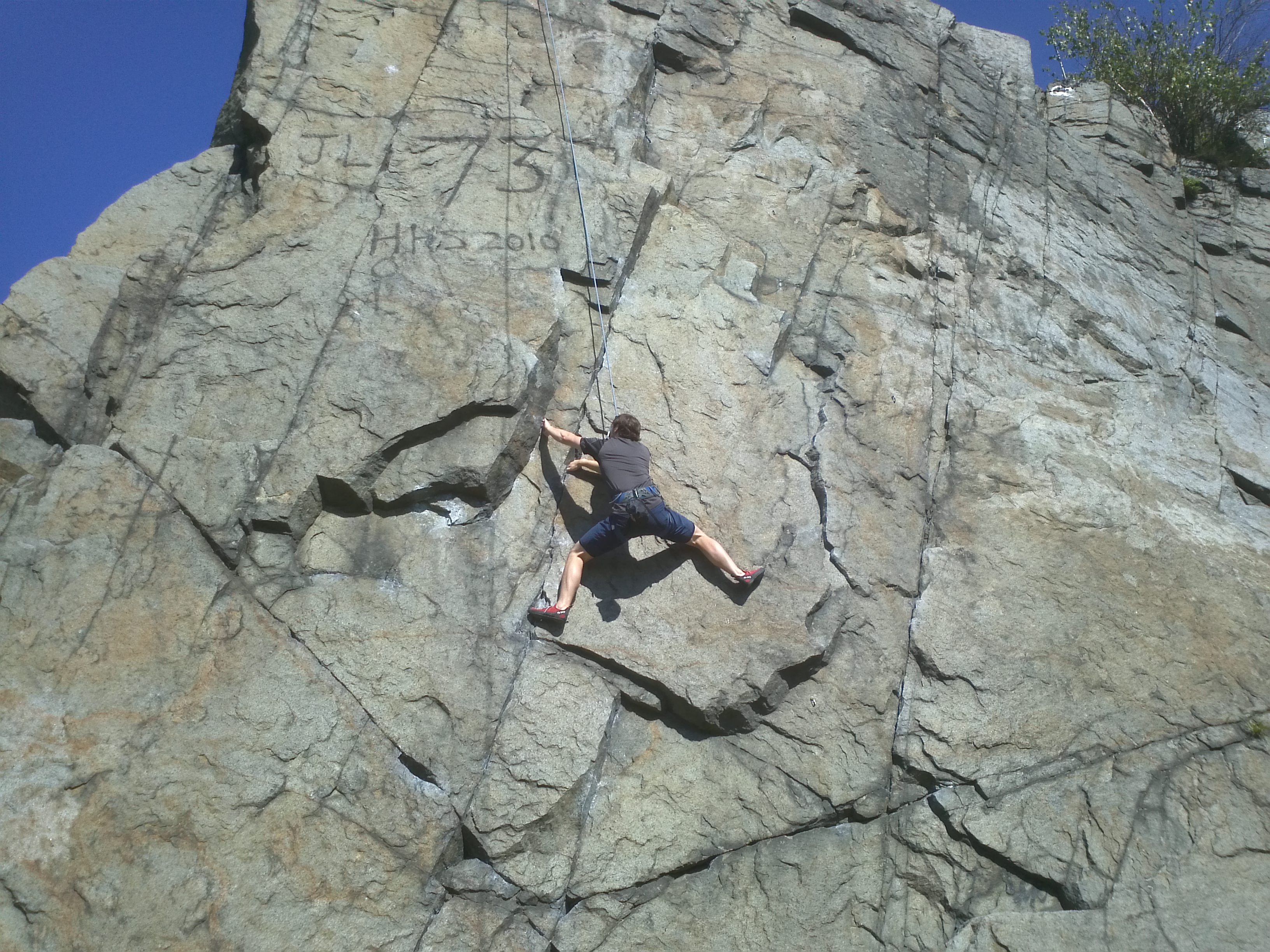
Sukes at the crux

Sukes at the crux. All photos credit Dwight and his phone.

Me repositioning

Me repositioning.

I climb in the gym with Dwight, but he hadn’t made it outdoors yet, and was a little challenged by the granite, and small, questionable footholds.  Sukes and I sent the first pitch, which I felt pretty good about after floundering at the crux on my previous attempt.   Dwight gave it a good effort, but decided to call it so we would have time to set a different route.

I was interested in which route we’d been on, so I did a little searching this afternoon and found a great site with details on the various quarry walls.  They also had a great diagram of the routes on K wall, one of the highest and probably most popular.  Oddly, we were the only group there until about 10 and then by 11 one or two other groups were trickling in.

The route we hit first was described as “Pins”, a 5.9  that mostly goes straight up a small crack system. The crux is right in the middle of the wall where there is a large pocket.  It’s labeled in green in the diagram of K wall.

Dwight gets on the wall.

Dwight gets on the wall.

Resetting and bouldering

While Sukes pulled the anchor I coiled up my rope and we headed over to the shorter M wall to set on a route Mike, Sukes and I had a good time on, figuring it would be easier and give our fingers a rest.  While Dwight was climbing with me on belay, Sukes, who apparently has balls of steel, solo’d the ~5.5-5.6 to our right and topped out at about 25-30 feet.

Dwight eventually had to head out, so Sukes belayed me up the pitch, which I couldn’t find a description of, but maybe varied between a 5.5 – 5.7.  It has an interesting start, with a big slab and juggy holds in the middle and a couple fun moves near the top.  After a clean climb, Sukes and I were feeling good but not particularly interested in setting up another anchor, so we started bouldering.

To our right on the M face, there were some nice undercling moves and a crack system leading up to a big jug ledge that we attempted a few different ways. As it was getting towards noon we headed out and avoided getting burned from the peak sun of the day.

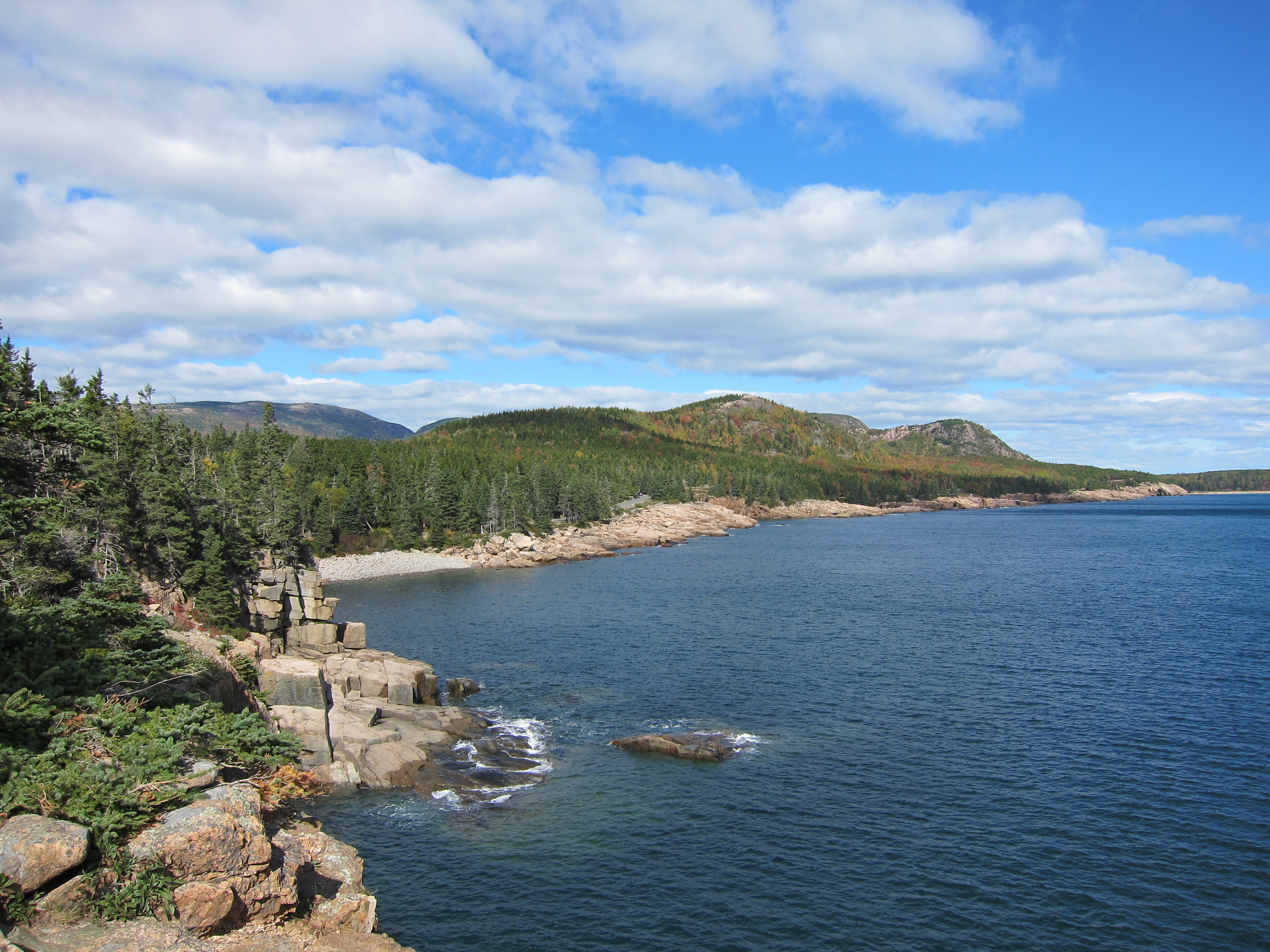
We’ll probably be hitting the Quarries again next weekend in preparation for some picturesque climbing in a few weeks up in Acadia, which we made a trip to late last fall.

I can’t wait for some views like this:

Otter Cliffs

Otter Cliffs in Acadia

Other Photos:

Sukes prior to his reach move.

Sukes prior to his reach move above.

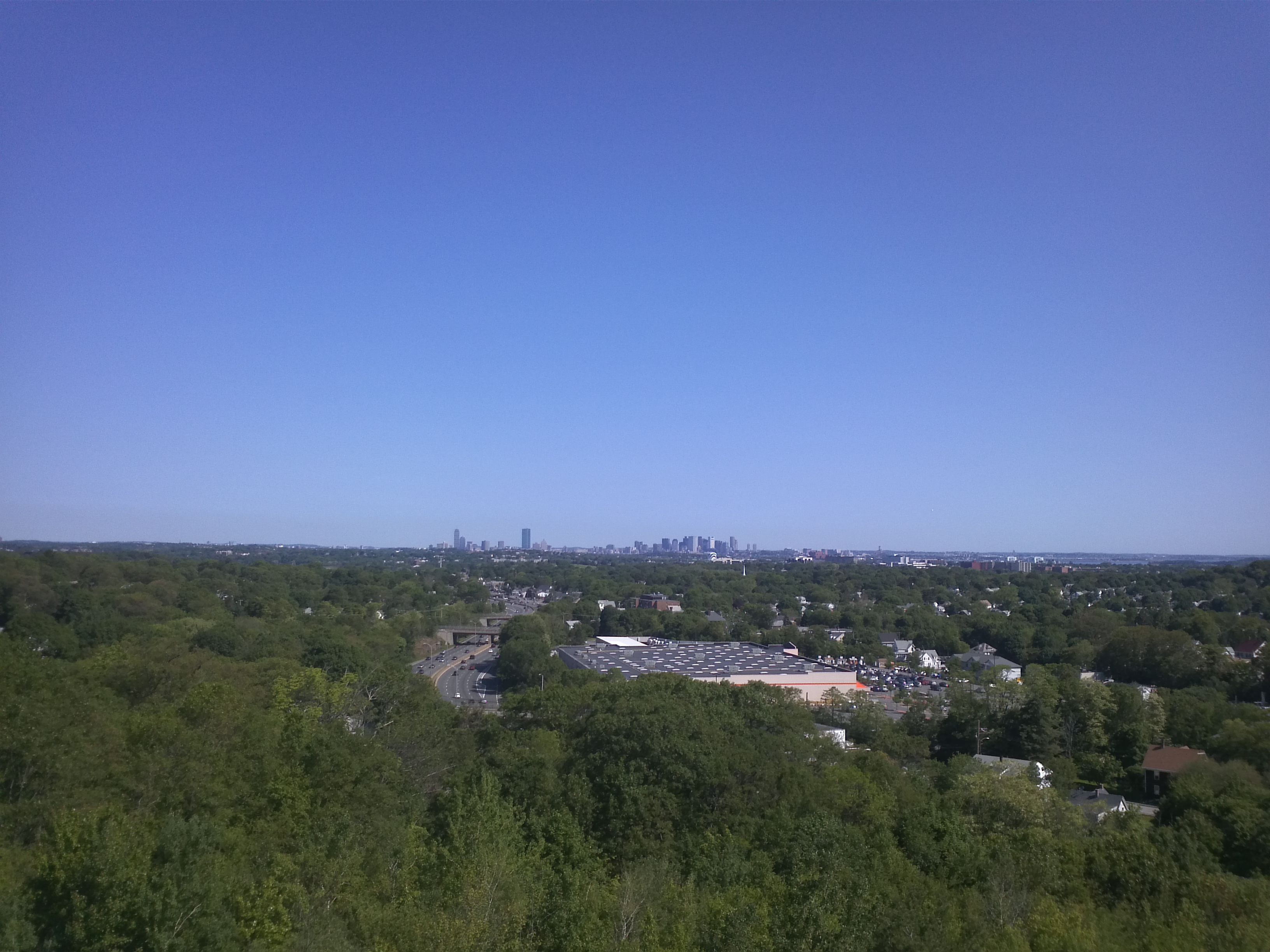
Boston from the top of the Quarry

Boston from the top of the Quarry.

Me trying the same move as Sukes

Me trying the same move as Sukes. This didn't work for me so I went up the left crack near my hand.

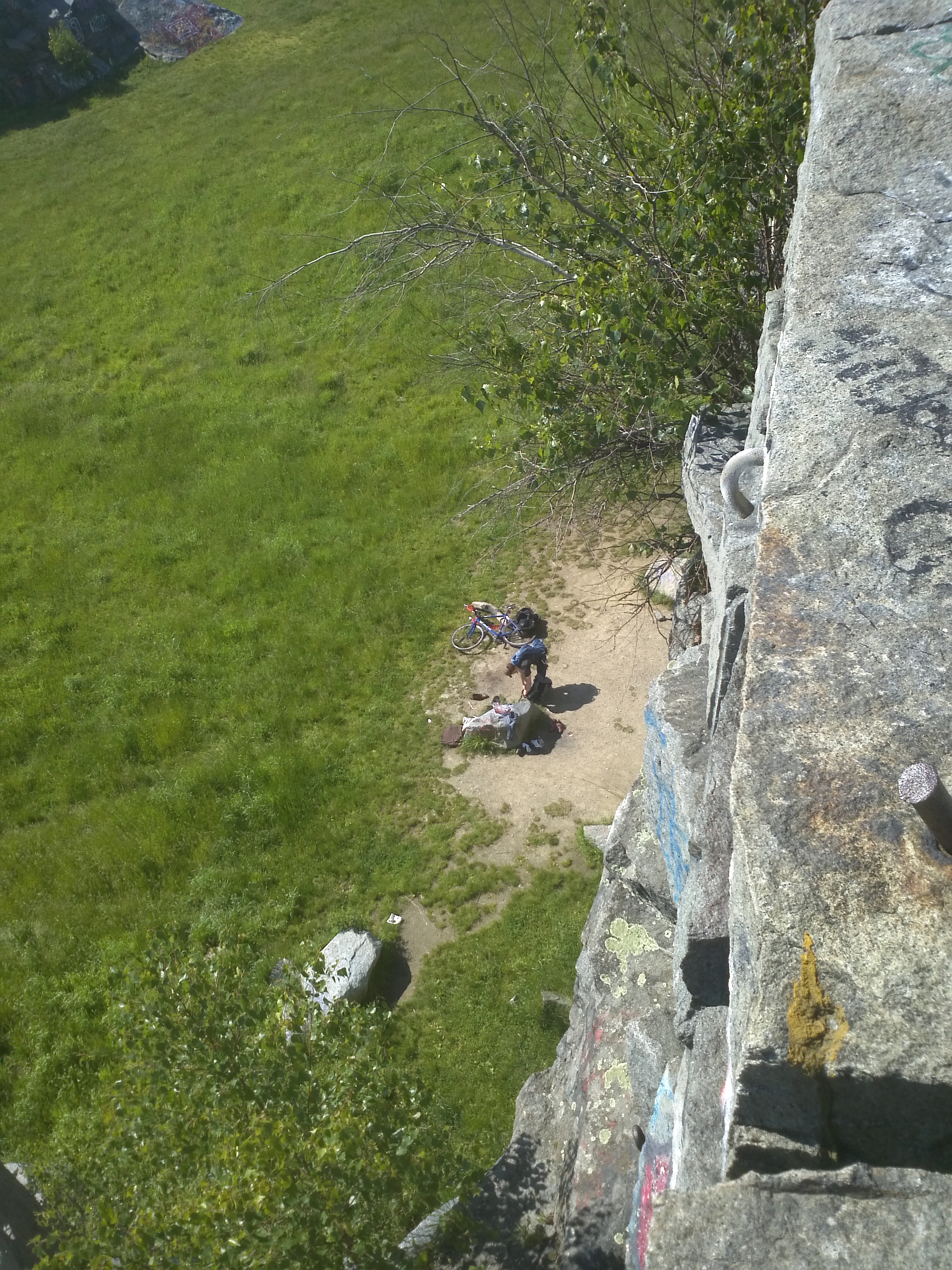
Looking down to our gear.

Looking down to our gear.

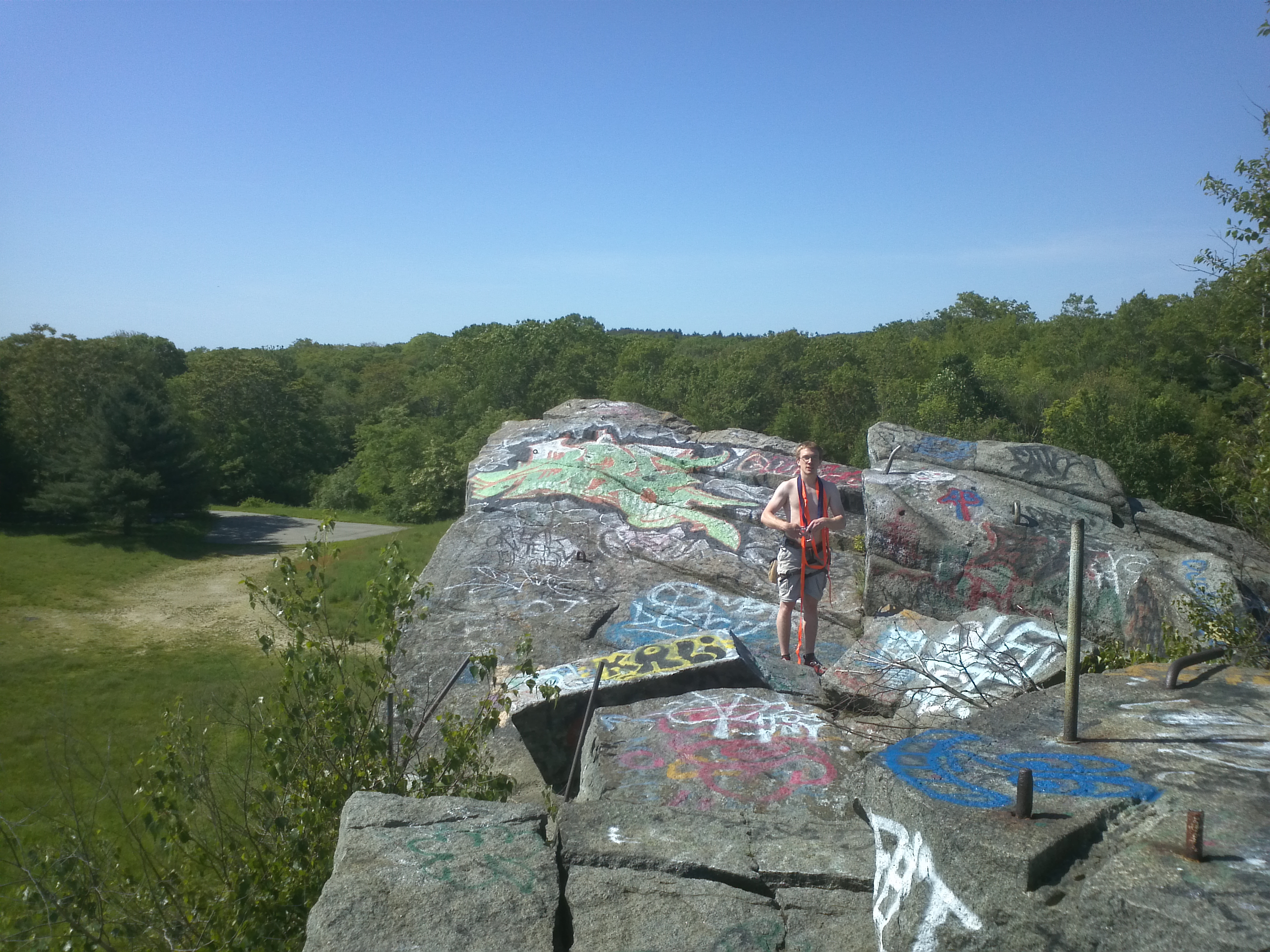
Sukes with the anchor.

Sukes with the anchor. We had a sling, some webbing and a 2 'biners for this set up.


Pack Weight

I haven’t been out on a serious hiking trip yet this season, but I figure it doesn’t hurt to prepare.  With the addition of my new gear, I’ve put more thought into my overall pack-weight recently.  I was astounded by the weight Ray Jardine carried on his thru-hikes–an unfathomably low 8 1/2 lbs sans food and water.  He hiked with his wife, so they were able to share some of their gear.

Here’s a rough outline of my current gear:

  • Pack 73 liter capacity:  5lbs 4 oz
  • 45 degree sleeping bag: 1 lb 3 oz
  • 2 man tent: 3lb 6 oz
  • Tent footprint: 8 oz
  • Knife: 2.8 oz
  • Stove:  2 oz
  • 2 person cookset and pot: 17.8 oz
  • Camera: 4.4 oz
  • Headlamp: 3.1 oz
  • Water purifier: 14 oz

Total Weight: 13 lbs 1.2 oz

Edit: I forgot about my sleeping pad which weighs 27 oz, and brings the total to 14 lbs 12.2 oz.

This doesn’t include a few variables like fuel, first aid, rope, stuff sacks, clothes, a journal, or maps, but I think its fairly representative of my base pack weight without food or water.  I don’t have scales that can measure in ounces so you’ll have to cut me some slack. While this isn’t 8.5 lbs, it’s not bad, considering I’d be able to share some of that gear if I was with someone.

The first thing I noticed is that my pack alone weighs more than any other item I put in it, and that it’s close to 1/2 my total weight.  This is probably an issue, and while I don’t think I have a bad pack, I immediately went and removed the “lid” from the top, figuring I don’t need the extra space when my pack is so large, and I could shave a good couple ounces.  The lid on my Osprey pack is meant to be removable and used as a lumbar pack, so it’s sturdy and has its own foam padding inside.  I’ve never used it as a lumbar pack–nor do I plan to.

I might also try the pack as a day pack and remove the hip belt to see how that feels, though I’m not sure it weighs enough to really be worth removing.

I’m not planning to start counting ounces, and cutting inches of canvas straps from my pack–yet, but it’s nice to have a reference for how much gear I’ll be hauling around, and to think twice about whether an item is really essential.

While Jardine’s pack-weight might seem a little extreme, it’s certainly an interesting approach to backpacking, and his mileages (he quotes averages over 25 every day of every thru-hike) prove that even if you’re strong enough to carry a huge pack, maybe less is what you need to get where you’re going.


Peak-bagging and Summit Beers

Freshly warmed up from Mt. Monadnock, and thoroughly convinced that there’s no ski-able snow left in New England, Alex and I geared up (read: had huge dinners and a few beers) and rolled up to Lincoln, NH to crash early and get a fast start for a long hike in Crawford Notch.  We wanted to do something long and fairly challenging, with some decent rewards, but avoid the Memorial Day hordes.  This turned out to be the perfect solution: the plan called for nearly 17 miles, over 8000′ elevation change, it’s remote compared to much of the Whites, and our early start and rapid pace nearly guaranteed few encounters with any crowds.


View Avalon, Field, Willey, Webster in a larger map

As usual, we got off to a slower start than we hoped for, most likely owing to general morning grogginess and a pronounced need for some White Mountain Bagel before seeing any real action.  Still, we managed to hit the trail at 10 of 7.

We set off at a clipping pace up the steep Avalon Trail, out of the AMC Highland Center.  The Avalon Trail goes pretty much straight up, without relenting until you pass Mt. Avalon, where we took a brief detour to play with my camera’s new smile auto-detect feature.  We experienced mixed results.  Next time I think I’ll just go with a tripod and 10 second timer…

Alex tries to figure out what it takes to trip the smile detect.
We gave up and did things the old fashioned way.
Photo Credit: Alex

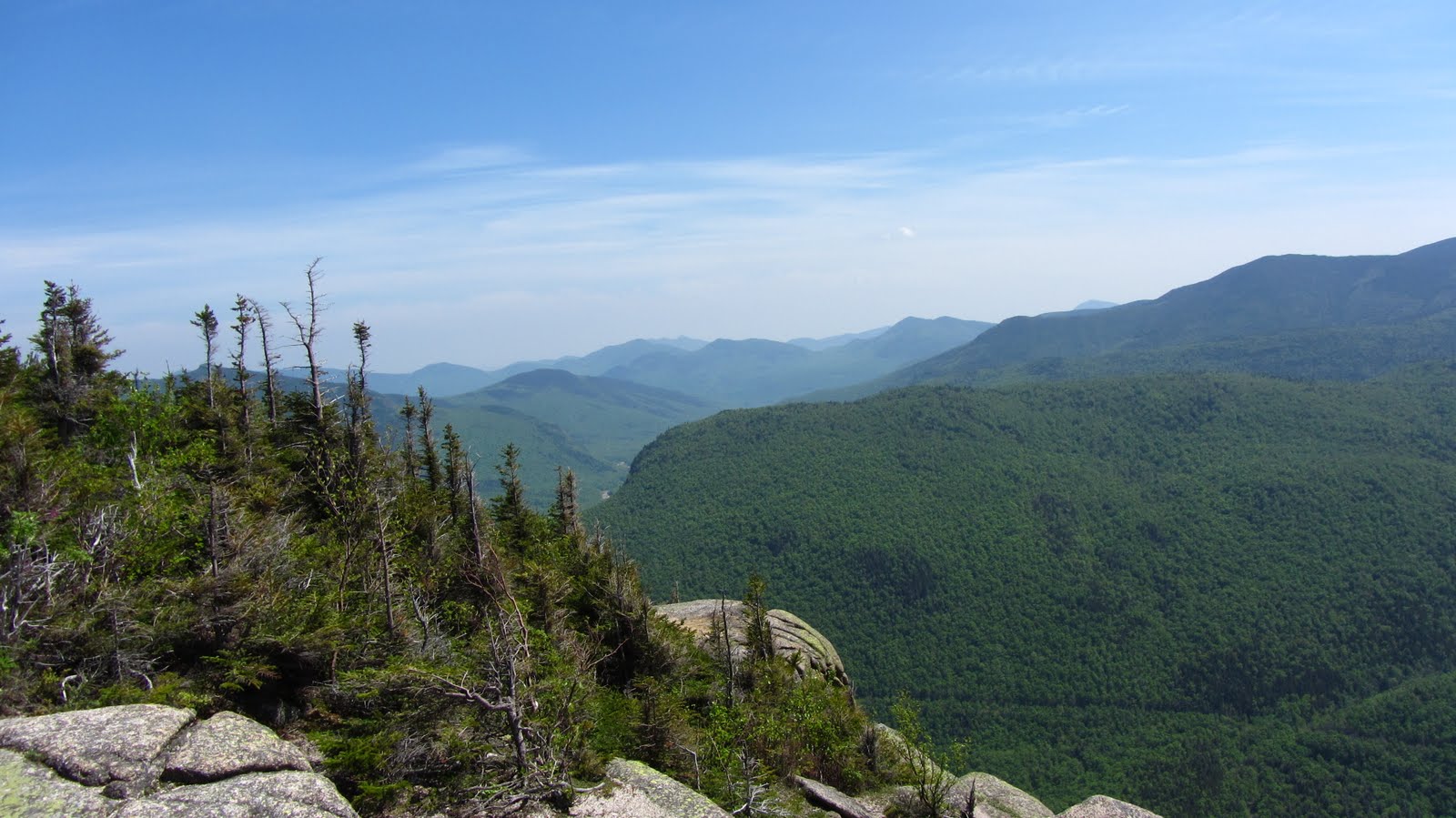
With all the serious climbing of the morning out of the way we sped off toward Mt. Field.  The trail dips down and up again between Avalon and Field but is considerably easier traveling than the route up from the Highland Center.  The trail wraps around the west flank of the ridge yielding impressive views of the Pemi Wilderness.  Without much trouble we summit Field and push on toward Willey, the final stop before descending toward and the crossing back over Rte. 302.

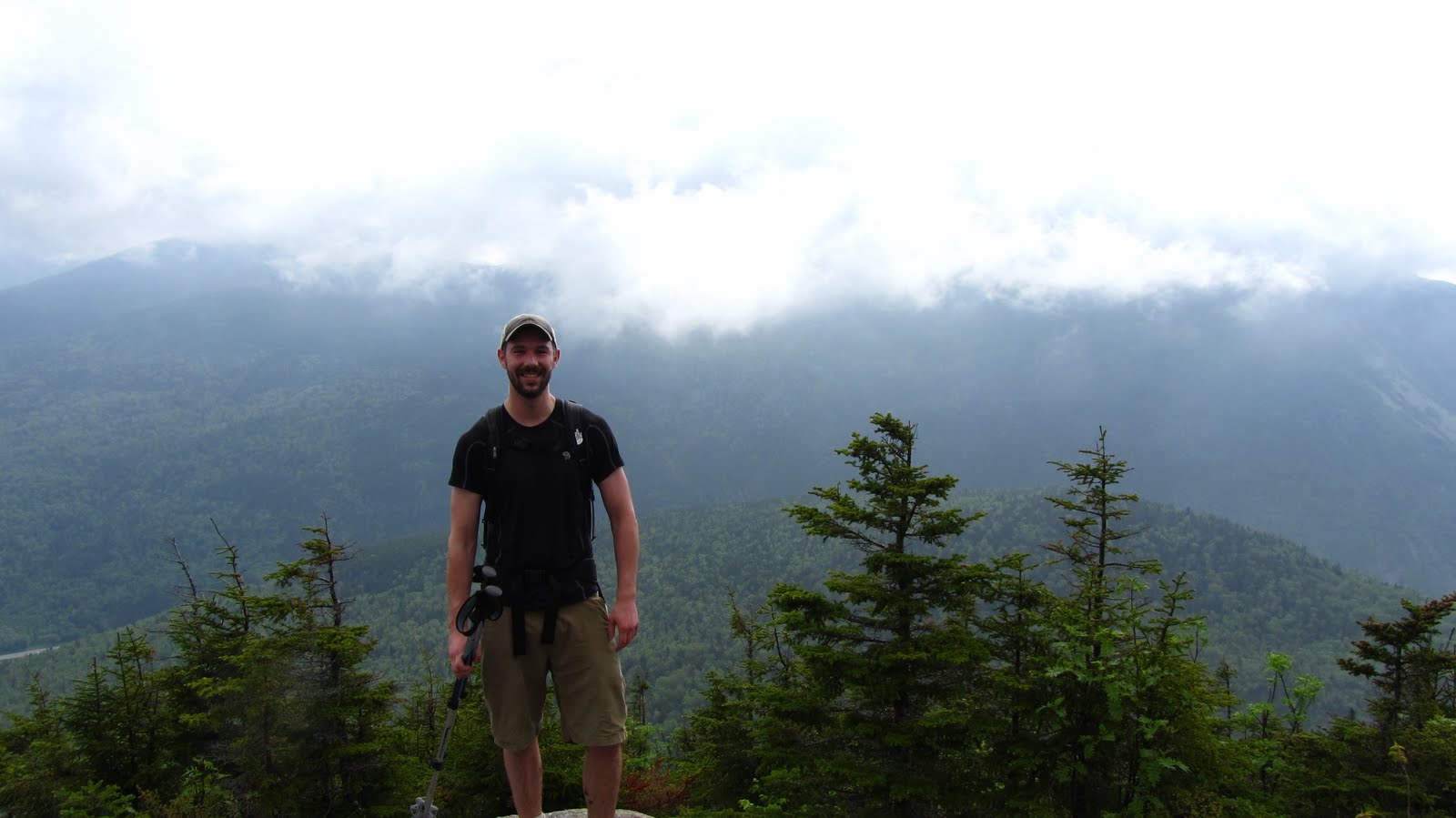
Willey offers some great view and some nice rocky spots to hang out and relax.  The sun was starting to get pretty high, and the morning’s haze and mist were starting to burn off, so we decided it was about time for Summit Beer Number 1.  Turns out it was a good chance for some more photos.

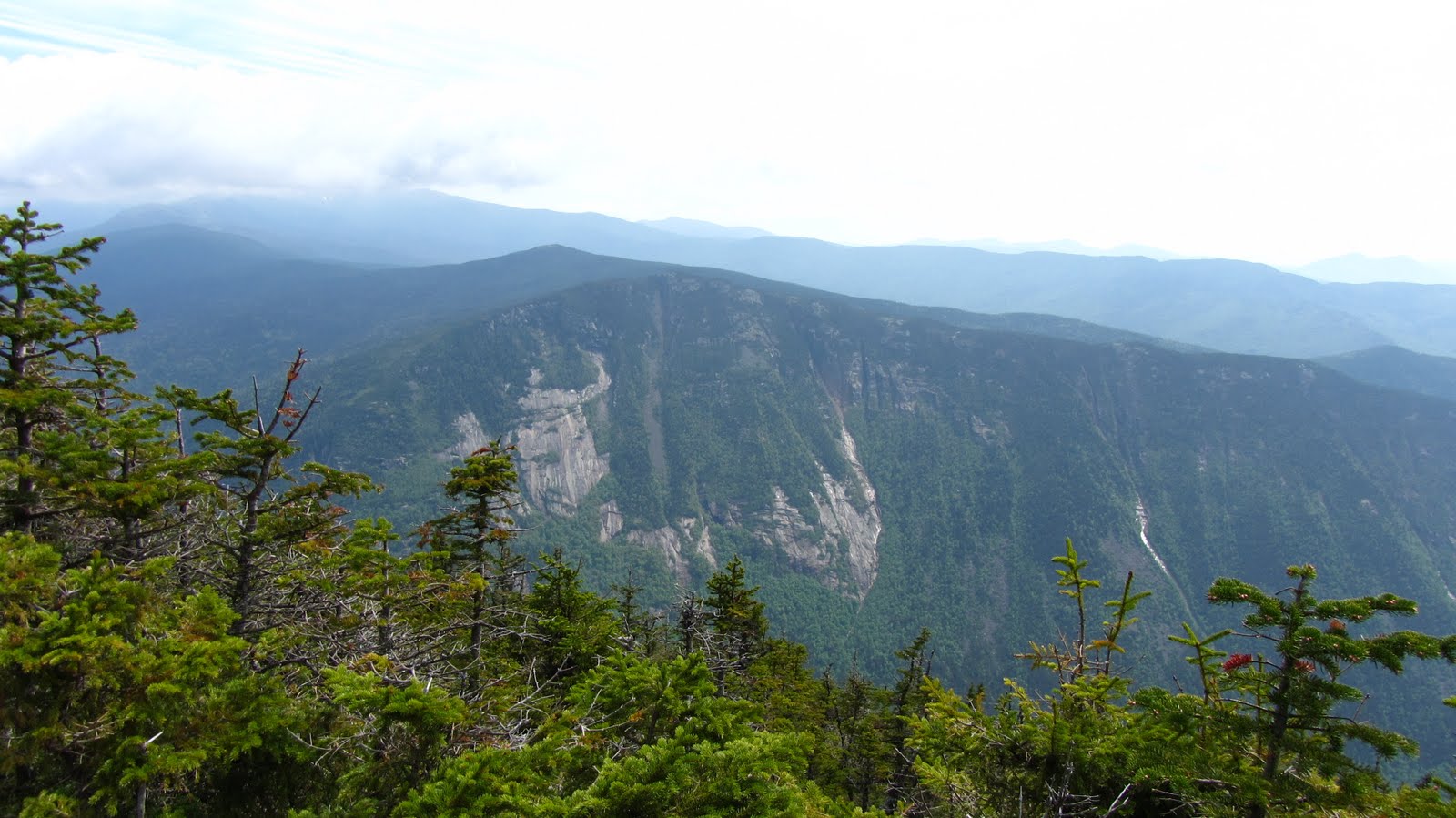
Some of these slides have to hold enough snow to be
ski-able.  Let’s hope a 3-degree file guide and some diamond
stones find their way into next year’s Christmas Stocking.
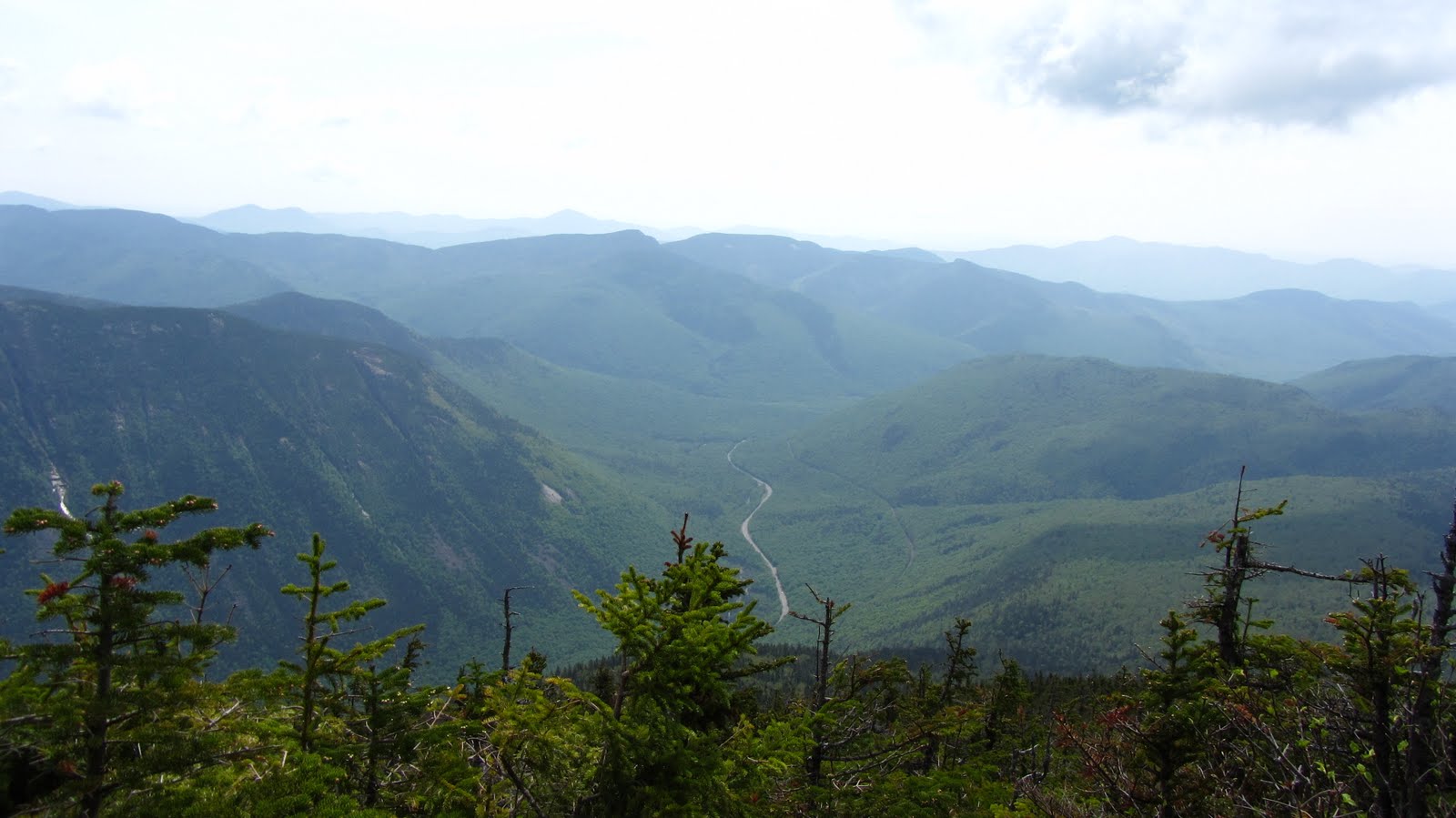
302 Snakes along the Notch floor.
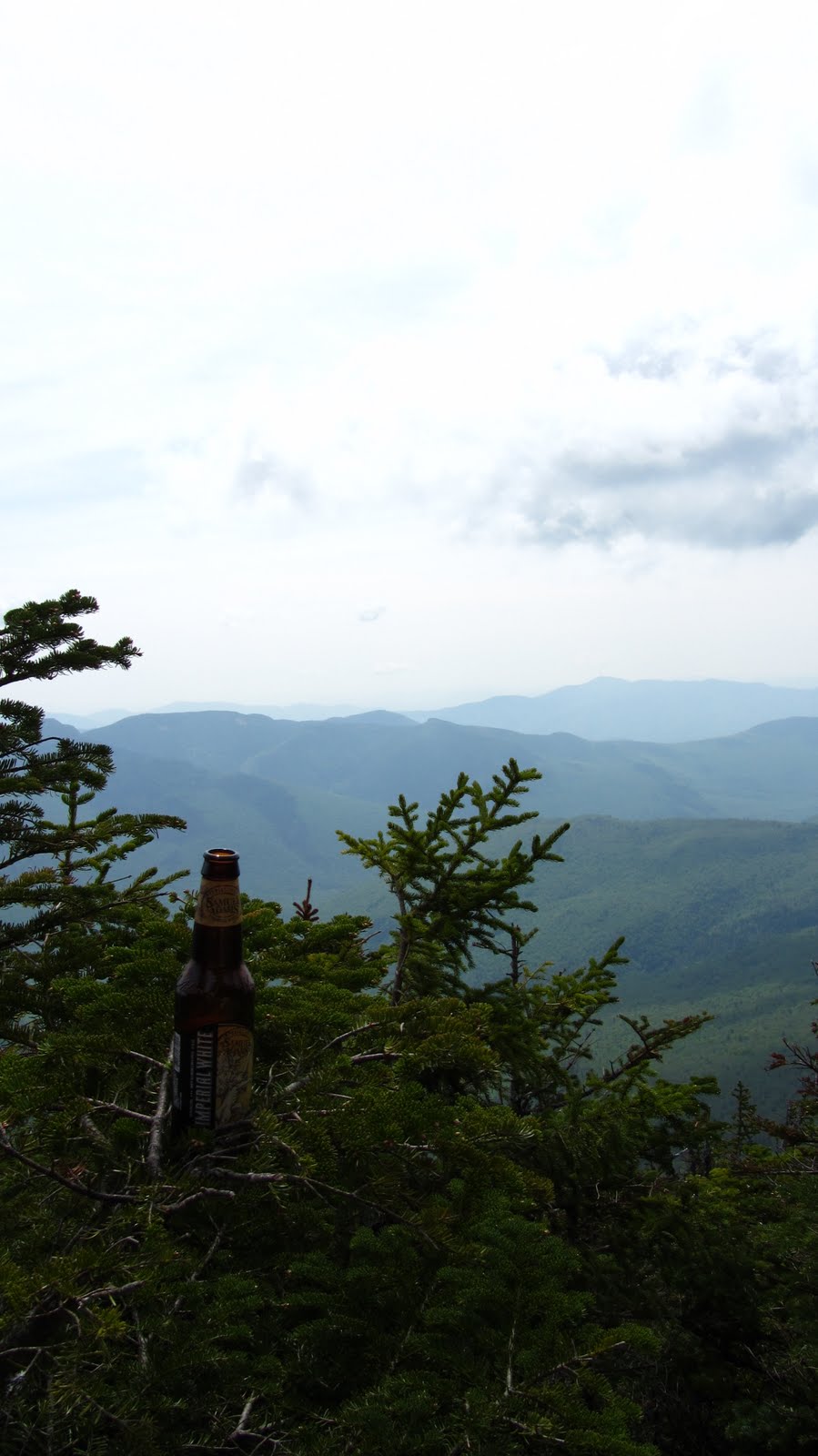
Summit Beer Number 1.  The
Sam Imperial White seemed like a solid bet
in terms of slaking our thirst  on a humid
day in late spring.
Nature.
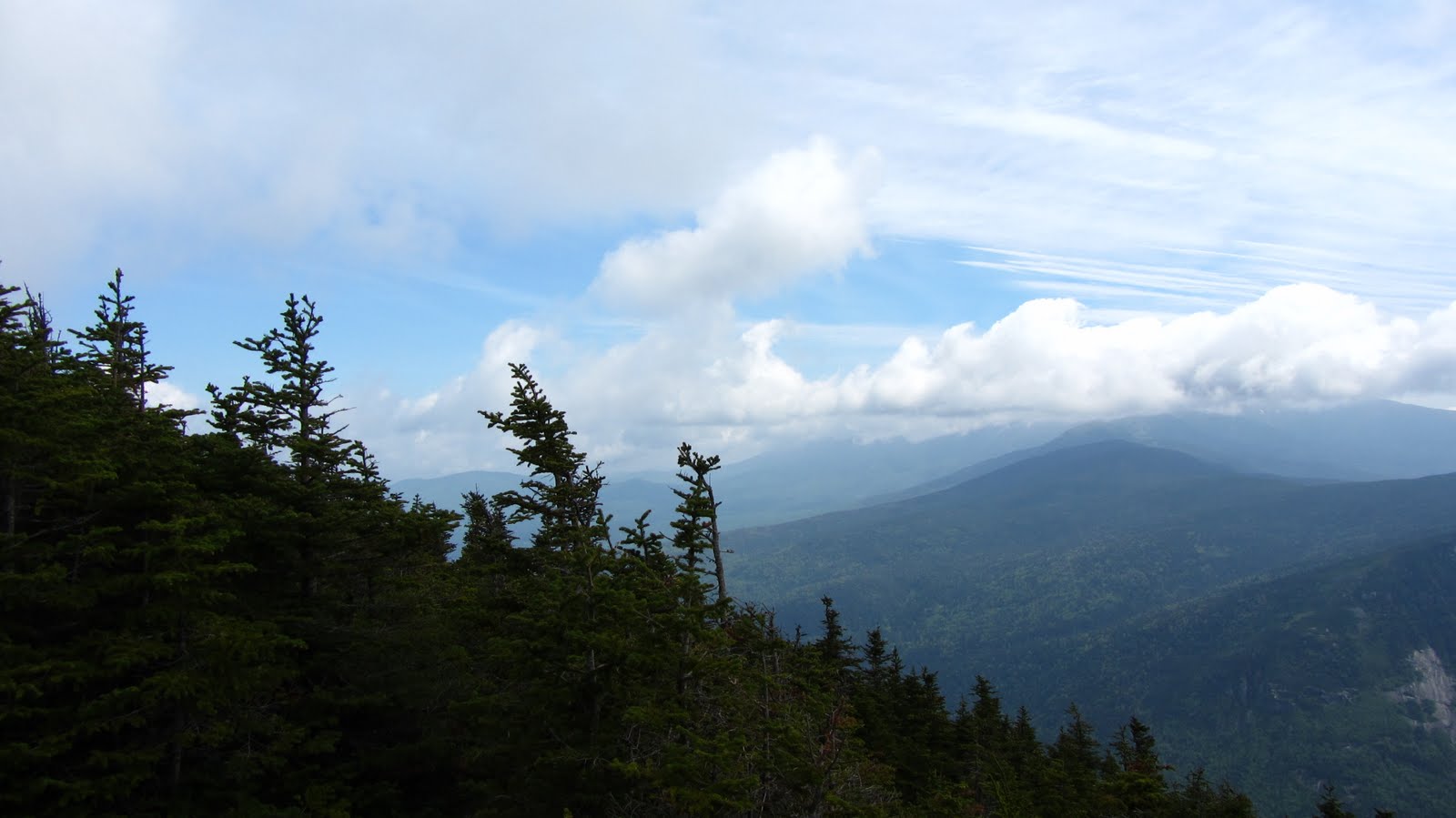
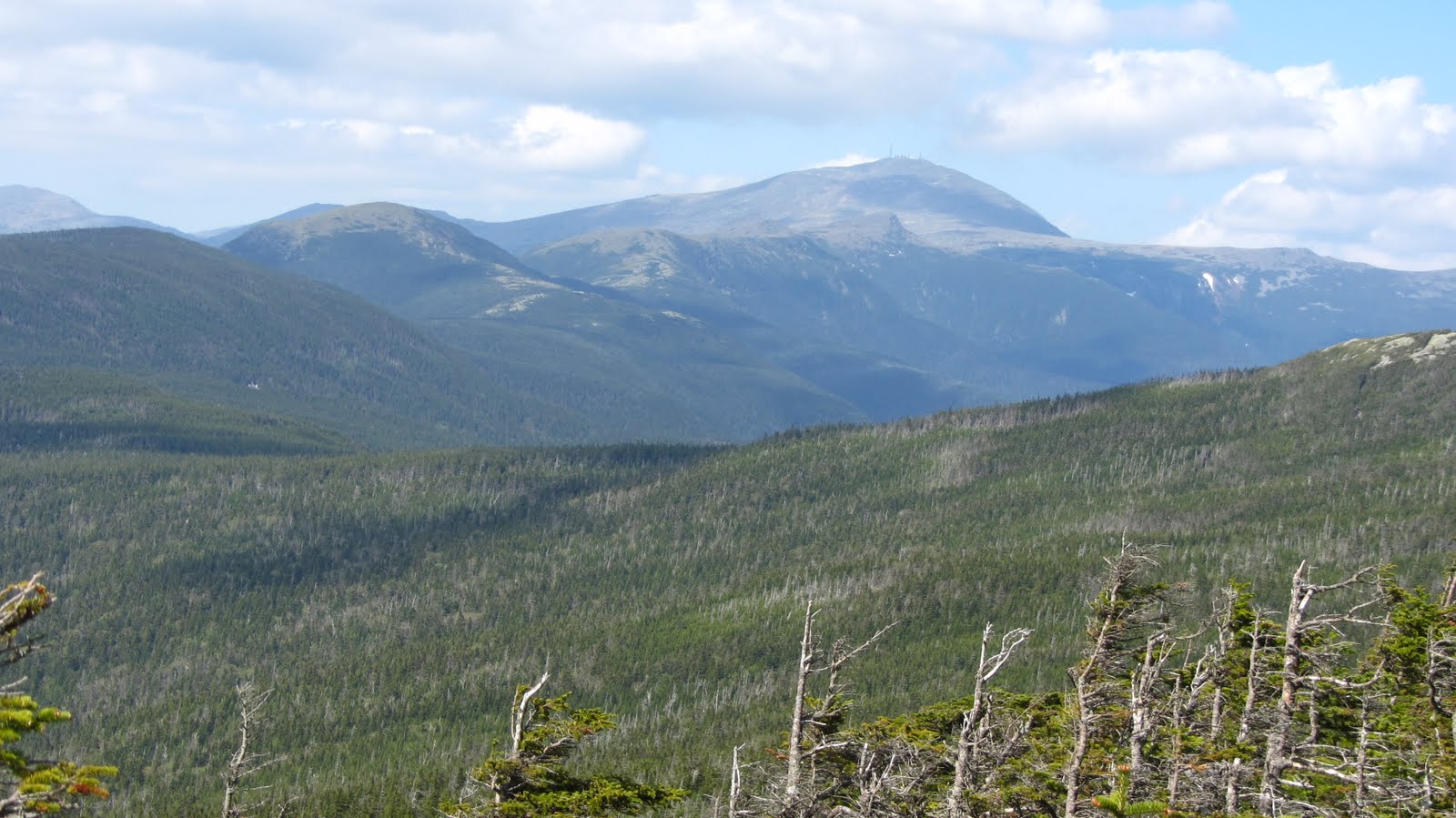
Clouds culminate over Mt. Washington.
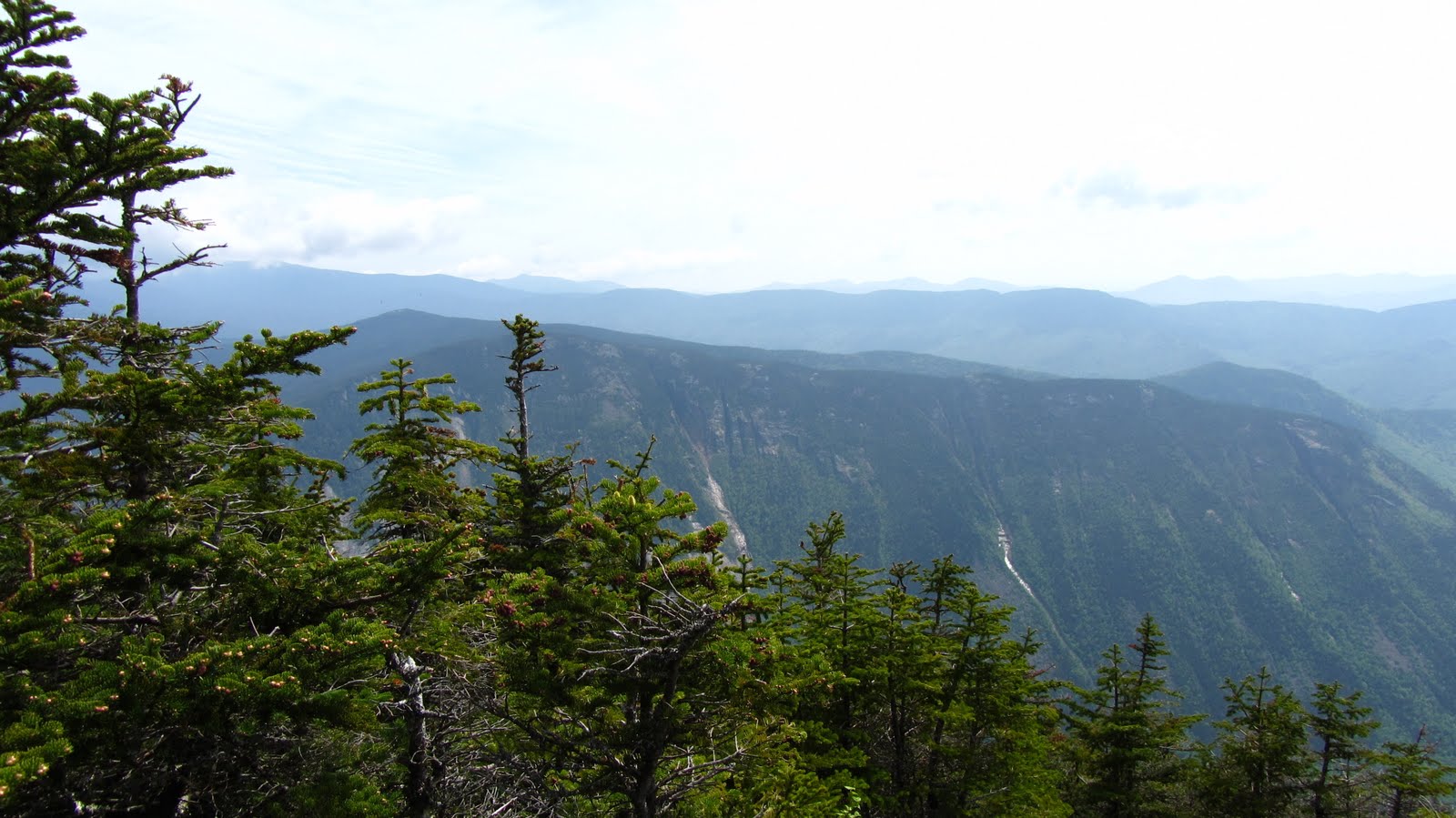
A sweeping view of the Notch.
More backcountry skiing recon missions.
Danger to fun ratio: acceptable.
Once refreshed and rested we set off back down toward 302.  The way down along the Kedron Flume Trail may be steeper than the way up in many places, and it’s challenging, but with a stiff pair of telescoping trekking poles you can really cruise down this trail.  We stopped for a few more quick photos at the flume and then again shortly there after as we crossed the Conway Scenic Railroad.
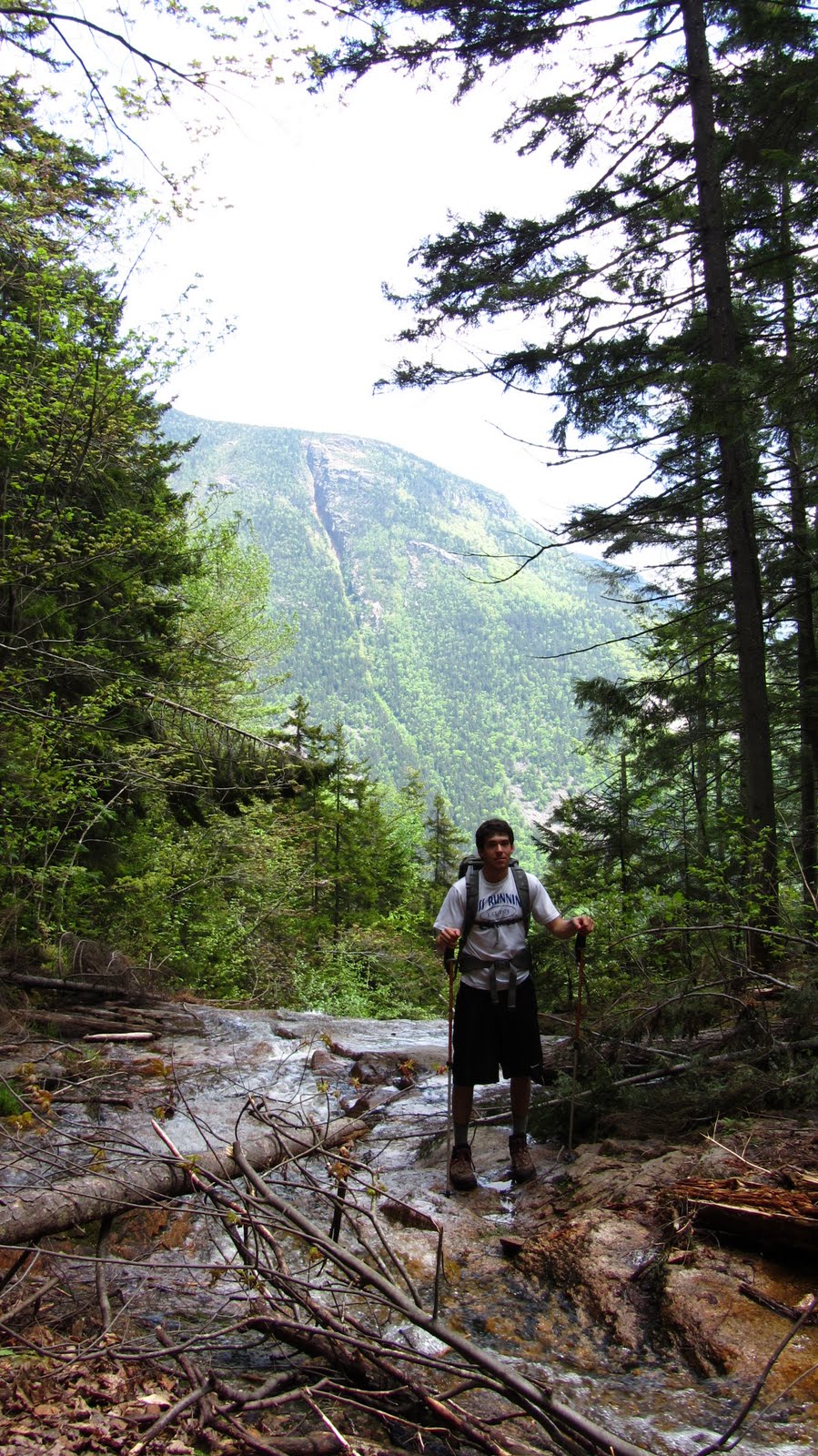
Jose chillin’ atop the flume.
Just plant, dammit.
Photo Credit: Alex
Alex stands his ground over a
modest railroad trestle.
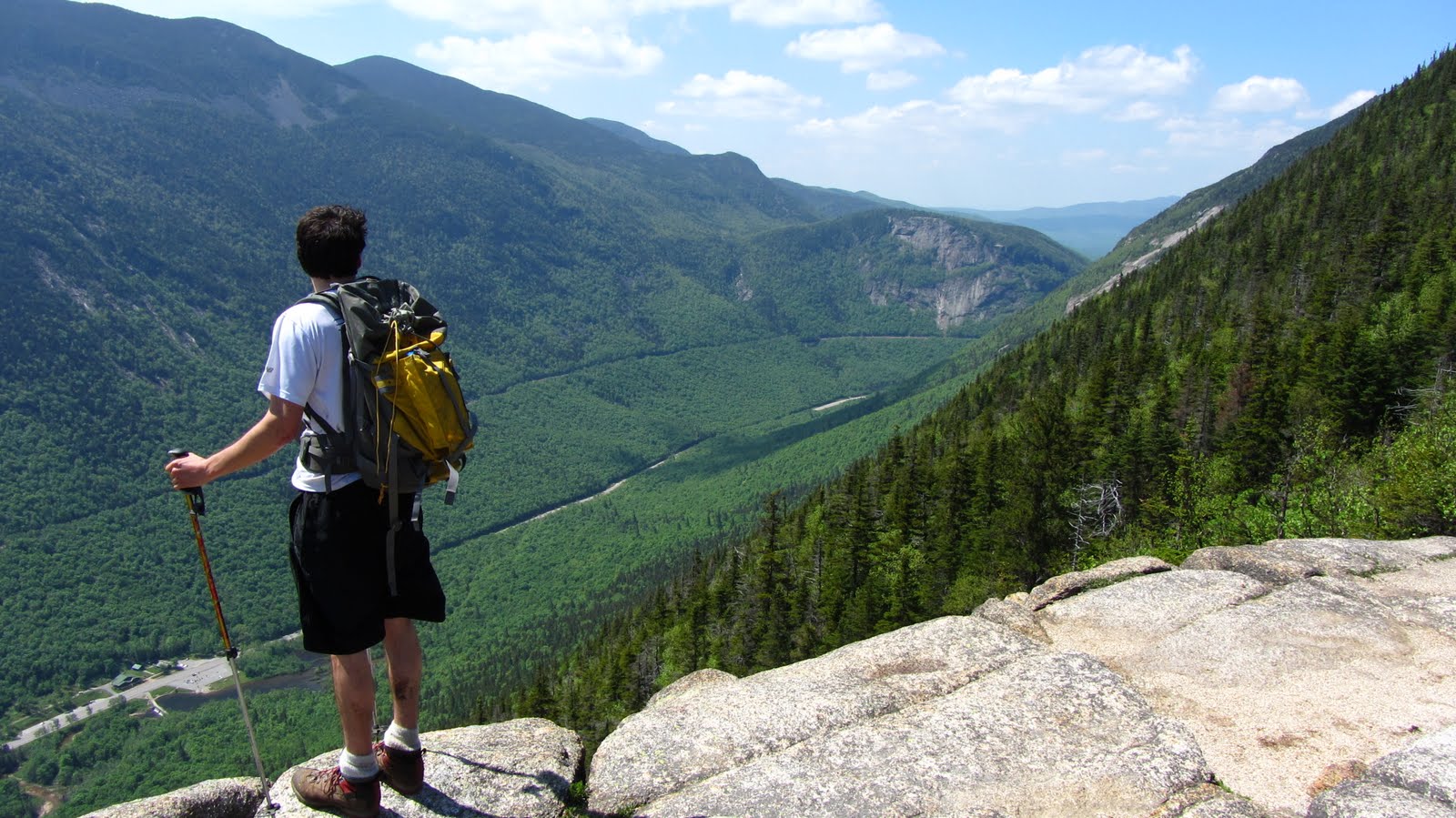
We emerge from the woods on of the Willey House, a gift shop and ranger station at the crossing of 302.  We fill up on water, change into fresh socks, eat (Alex had an ice cream) and steady our nerves for the next big climb or the day: Webster by way of the Webster Cliff Trail.  We cross the highway, and head back into the woods, roughly following the Saco River toward the shoulder of the cliff, at which time we head more or less straight up.  The Avalon Trail is no joke, but the first mile or so of the Webster Cliff Trail is a real kick in the pants.  Numerous switchbacks notwithstanding, it relentlessly crawls up to the top of the cliffs.  By the time we approach the ridge my quads are starting to cramp up and Alex is working on some Long-Trail-esque blisters.  The arduous climb eventually gives way to an exciting ridge walk; not as exposed as Franconia Ridge but every bit as fun.  After a quick look around we move out.  
The view to the southwest just after cresting the ridge.
Alex surveys the Notch looking north west back toward the
Highland Center.
We charge ahead toward Webster, eagerly anticipating Summit Beer Number 2.  By the time we arrive at the summit of Webster, we’re starting to wonder if summiting Jackson is entirely necessary: we conclude that we actually have a superior view of the surround land from Webster and decide to can the extra 1.5 miles and beeline for the Highland Center, but not before fueling up and snagging a few final photos.
Him again…
Photo Credit: Alex
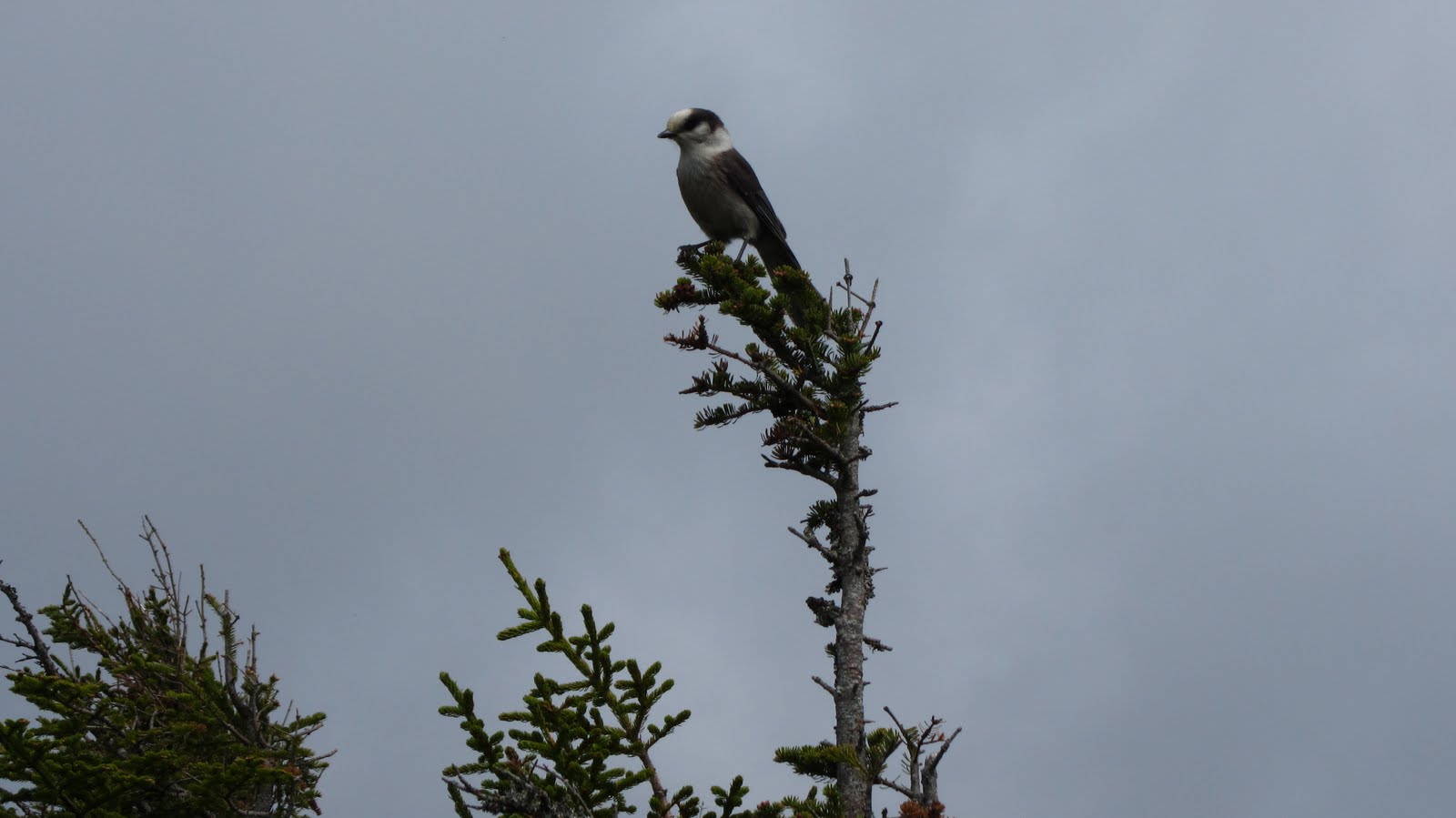
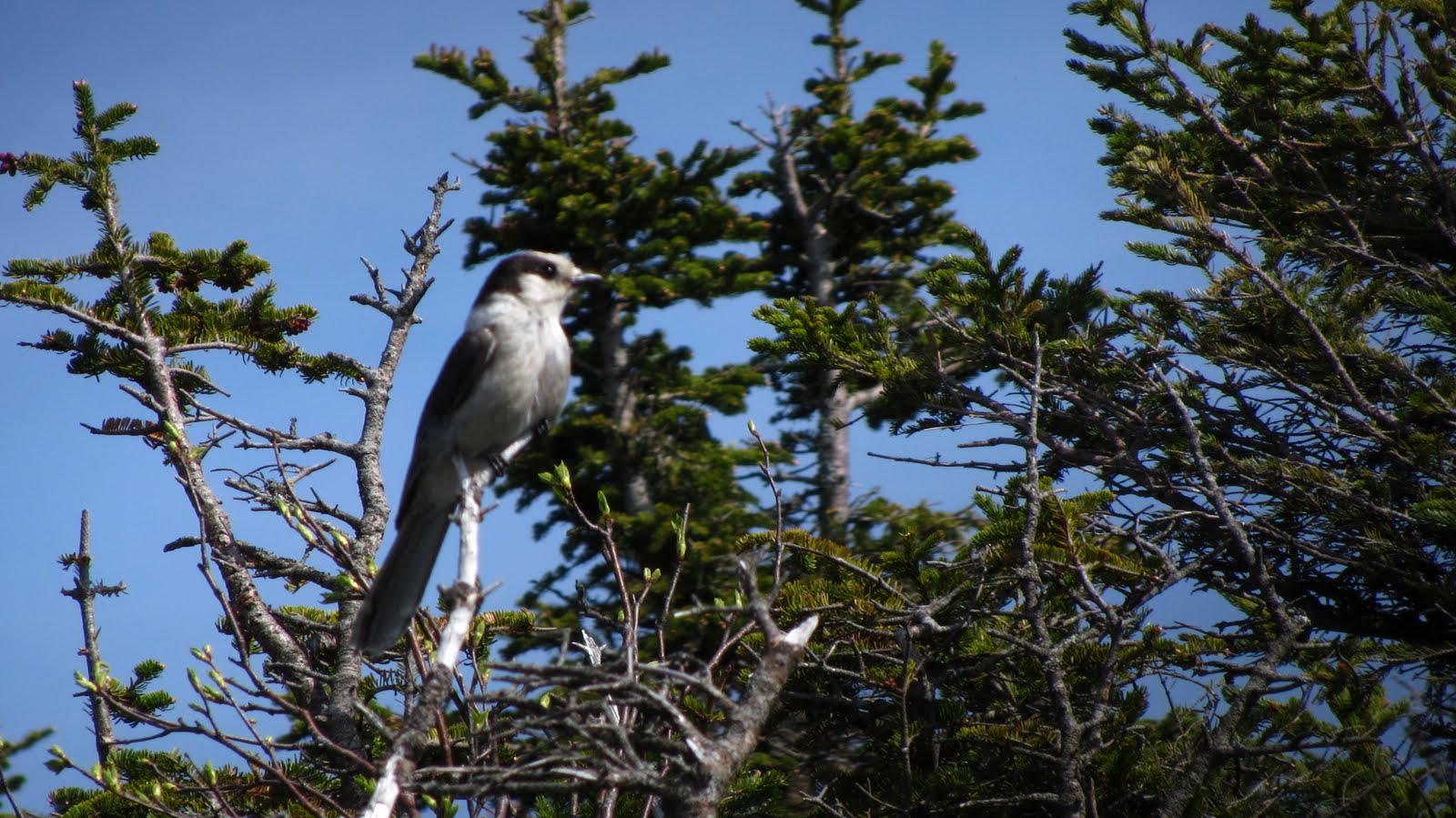
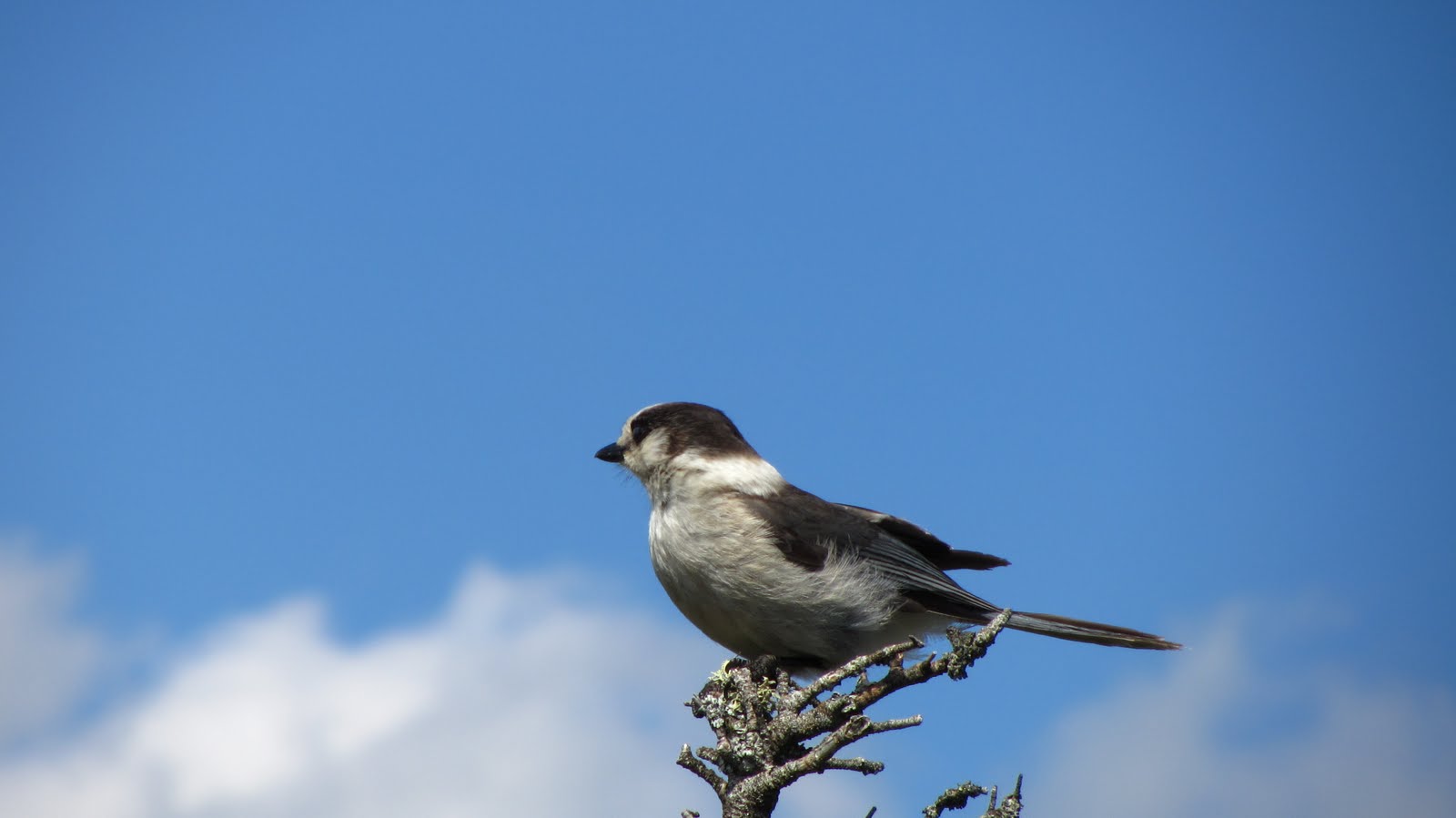
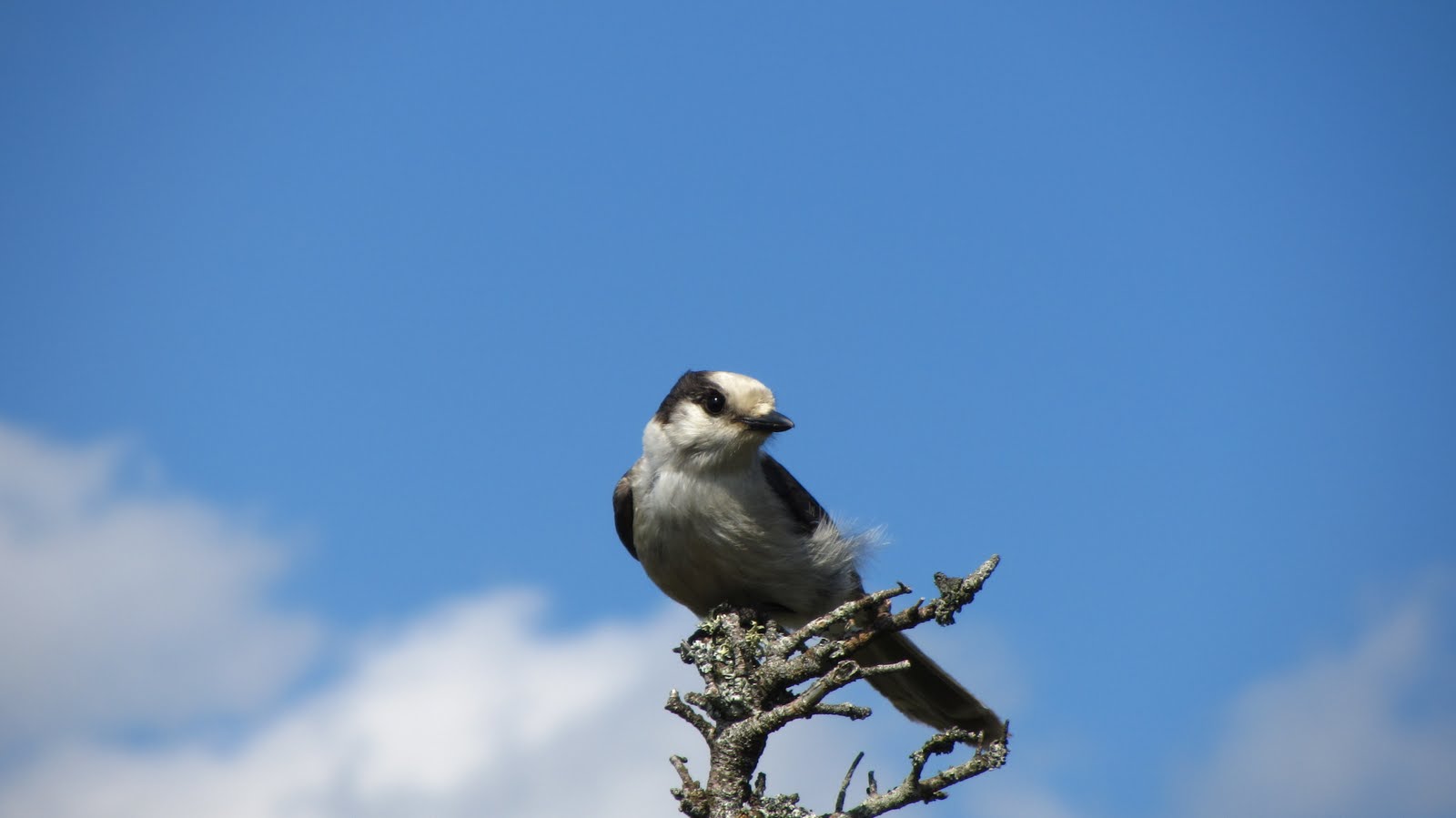
This bird was completely undeterred by any of our noise
making.
Photo Credit: Alex
We speculate that he followed our scent across the Notch.
Photo Credit: Alex
Mt. Washington and the Souther Presidentials from the
summit of Webster.
The Mt. Washington Hotel.
A brief respite the Highland Center, just past 5 in the evening.
Gear List:

Asolo TPS 520 GV Boot - Men'sBlack Diamond Contour Elliptic Carbon Trekking Pole Ink Blue, One SizeBlack Diamond Traverse Ski Poles