Tag Archives: day hike

Guyot Backcountry Skiing Recon

Rumor has it, that there is some truly great backcountry skiing nestled deep in the
Pemigewasset Wilderness of the White Mountains.  My partner in crime Rob, did much of the background research, citing viewsfromthetop and the TGR forums as his main sources.  Two sizable and steep bowls punctuate the southwestern flanks of Guyot.  Unfortunately the nearest road (in winter at least) is no less than 8 miles away from the either of the bowls.  In winter it would likely take the better part of a day to get there, making the minimun reasonable trip length 4 or 5 days: one to get in, one to get out, and 2 or 3 days spent skiing and camping at the base.  The goal for the weekend was to ‘swing’ by Guyot, scope out the skiing and assess the whole plan for feasibility unencumbered by winter gear and while conditions are still mild.

View Guyot Recon in a larger map
In order to fit this whole thing into one of the shortening days we’ve been experiencing, we came out of hibernation at the ripe hour of 4:30 on Saturday morning.  (Actually the plan was to get up at 4, but my alarm happened to have AM and PM reversed and Rob’s had some similar problem.  I just happened to roll over and see that time around 4:20 AM.)  We arrived at the trail head around 6 AM and were on the trail shortly thereafter.  The sun had just recently crept over the mountaintops.

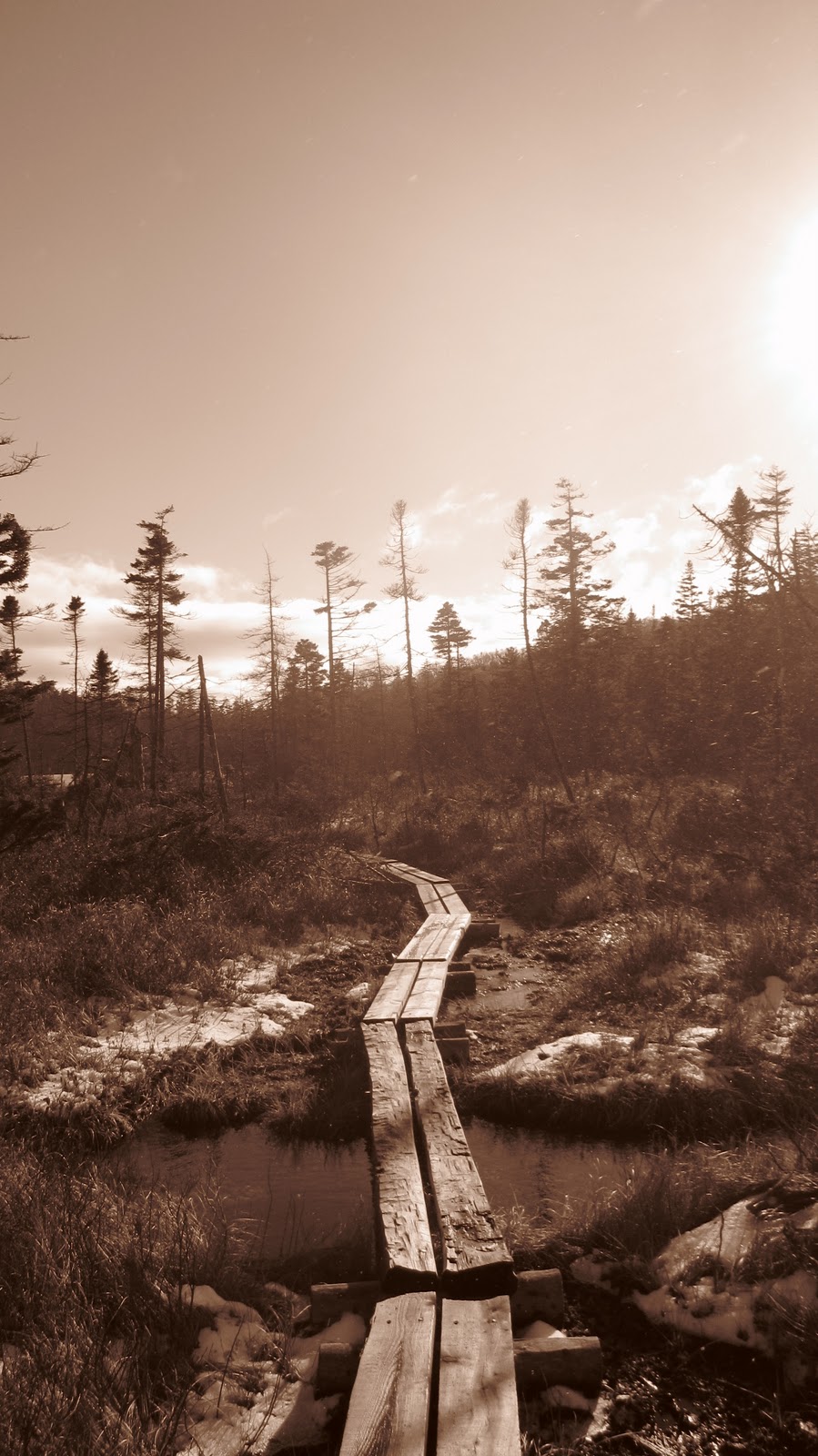
The first leg of the approach is literally pretty straight forward.  You head north along the Lincoln Woods Trail and eventually the Franconia Brook Trail.  These trails are formerly a railroad bed used for logging in the late 1800s.  The remaining ties and several bridge footings can still be seen for most of the way.  As you might expect this part of the hike isn’t that challenging, however it is a pleasant walk alongside all sorts of rivers (notably, the Pemi and Franconia Brook), ponds, and marshes.  It’s prime moose country and we even saw some tracks on the trail, highlighted by the light dusting of snow and frost.

View Guyot Recon in a larger map
Redrock Brook marks the cutoff point for leaving the trail and heading off toward Guyot, at which point you turn Northeast and follow the brook into the bowls.  We made fair time on the 7 mile approach, arriving at the cutoff point in about 3 hours.  Having achieved only several hundred feet of elevation, the brunt of the trek was still ahead of us.  We had several miles of bushwhacking and about 2000′ of vertical remaining – none of it was on proper trail.  There are several abandoned logging roads and rail beds, however all of them are grown in and eroded.  In the winter the best route would likely be simply skinning up the brook.  We varied our approach, following the stream bed, animal paths, water runoffs and abandoned roads according to whatever seemed easiest.  At one point the stream runs almost entirely underground and you can just walk right up the middle of it.  However, for the great majority of the slog, you’re plowing through a morass of underbrush.  It was a challenge to say the least and our pace slowed considerably.

View Guyot Recon in a larger map
We started the day under cloudy skies, and as the day progressed it became party cloudy with enough sun to warm us whenever we stopped for food and water, however as we gained elevation and got closer to the bowls it was an entirely different story.  The wind seemed to funneling up the ravine into the bowls bringing with it plenty of cold and apparently moist air.  We made it within 300 vertical feet of souther bowl but by this time virtually all horizontal surfaces were coated in fresh snow.  The winds were outright howling and and snow was coming down pretty thick.  I was tempted to pull out some of goggles.  As we looked up the stream bed we could see that it became increasingly challenging: running water, snow, water ice, boulders, fallen tree…the banks of the stream were dense pine and spruce.  It was now past noon and we’d been on the trail for over 5 hours.  We had no idea what the weather was outside of the bowls, but it was a full blown blizzard where we were.  We decided to call it quits and head back just short of our goal.  It would take us another 5 hours at least to ex-filtrate and we would be lucky to be out before sunset.

The slog out was basically the same as the slog in since we mostly just retraced our steps in the snow.  We tried to pick up some the abandoned roads which were reputed to be in the area but were not entirely successful in this endeavor.  We picked up the actual hiking trail around 3 or 4 and hauled back out to the parking area, just off the Kancamagus.  We finished around 4:30 PM after about 17 miles.

While we were unable to get a really good look at the skiing terrain, I have to claim that we accomplished our overall goals.  We know the skiing will be great just from looking at topo maps and satellite imagery.  The real unknown quantity was the hike into the area, which we now have a very good feel for and have learned many things from.  Given the length of time required to get there we can’t really consider going for less than 4 days.  Three would work technically, but it seems like a lot of work for only one full day of skiing.  Given the duration of our stay in the this exceedingly remote area and the amount of food and other supplies we’d need while there, using sleds or ski-pulks would be mandatory.  We’d skin nearly the entire way in.  By storing the gear in a duffel lashed to the sled, we would have the ability to carry the entire apparatus short distances for any areas that prove unskinnable, though those would seem to be infrequent given a deep snowpack.  An ultralight touring setup would go a long way toward easing our efforts on the way.  Something to seriously consider would be purchasing cheap X-country gear and using some kick-wax for the entire approach and hauling the alpine ski gear in the ski-pulks.

Some obvious safety concerns surround the entire trip.  It’s considerable remoteness would really force us to be completely self sufficient – if something were to happen we’d be a day away from help in good conditions.  Avalanches are a real concern as well, especially with no formal forecasting for that area.  We’d have to rely on our own limited forecasting skills and be prepared to make decisions accordingly.  We’d also have to be ready to prepare some really weather-proof shelters if the wind and snow are anything like what we witnessed on Saturday.  If we were to attempt such a trip, we’d have to wait for an ideal window of weather and avalanche conditions, free up an extended long weekend, prepare the pulks, maybe get X-Country gear, brush up on avy skills, be in seriously good physical condition and finally hope for the best along the way.  It would be a pretty serious undertaking but would probably be incredibly fun if well executed.

Gear List (click links for more product info):


Black Diamond Ascension Nylon STS Skins One Color, 95mmMountain Hardwear Expedition Duffel Bag - 3000 - 8000cu in Black, LFree Shipping on Orders over $50

Cannon Mountain: November

With the winter fast approaching I’ve been more or less hell-bent on getting in as much hiking and other physical activity as possible.  With that in mind a short, steep, late fall hike with some superfluous gear in my pack seemed like just the ticket to get me warmed up for winter.  This time I went with Mike, a veteran 4 season hiker and old friend.  We met at the Lafayette Place Campground ( a primitive tent site) at 10 AM.  We were on the trail just a few minutes later.

View Cannon in a larger map

Pretty serious business…  Photo credit: Mike.

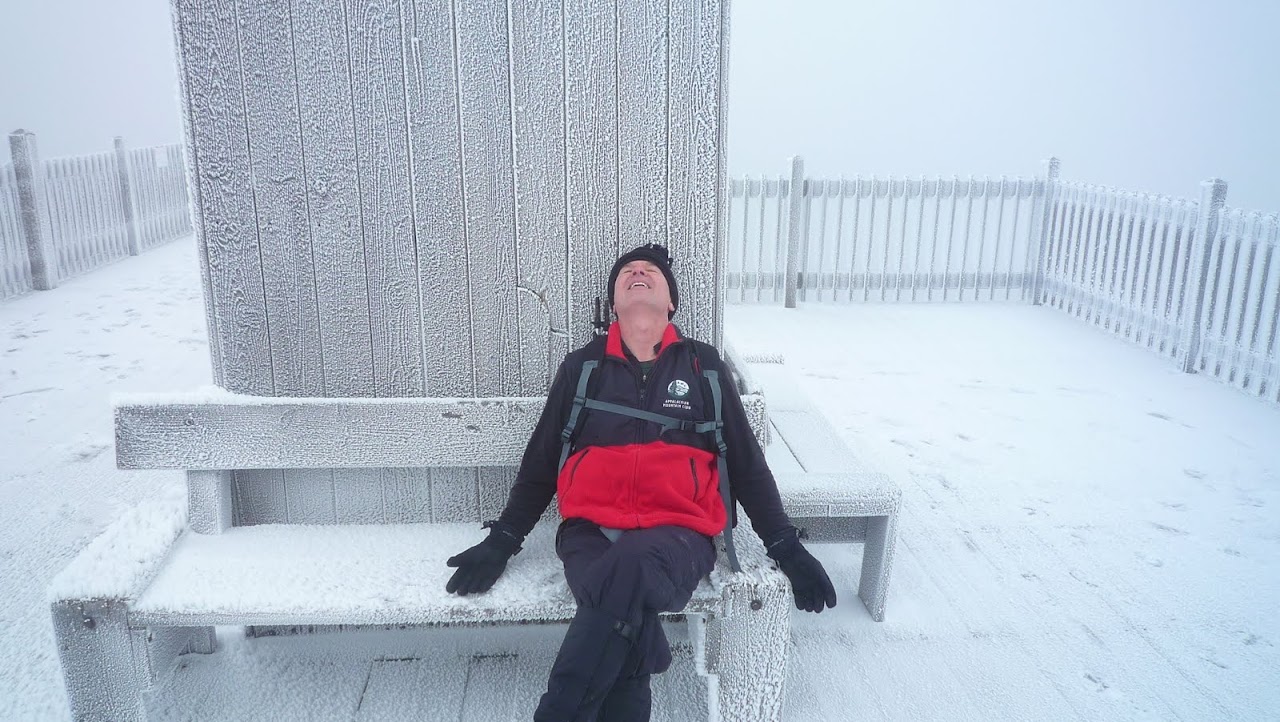
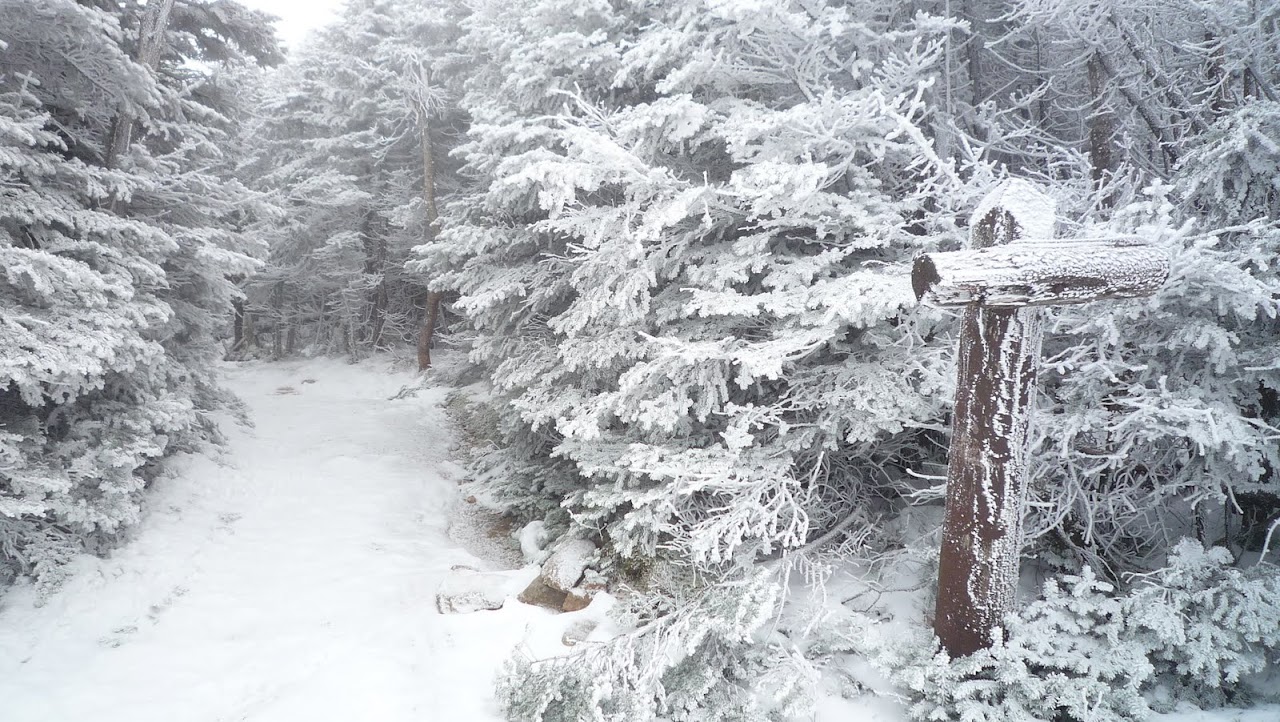
I’ve hiked Cannon several times in the past, but it’s unique terrain, steep ascent and variety of routes up and down make worth the repeat visits, especially as the seasons change.  Despite the forecast of ‘partly cloudy’ it as entirely cloudy in Franconia Notch.  At face value this is disappointing, but I’ve found that such weather, while nixing the view, really puts an emphasis on the remote, forbidding and exciting nature of the mountains.  Also, at this time of year it can create rime ice over nearly every surface – really cool looking.

The trail leads right out of the parking lot and ascends steeply up the southeastern flank of Cannon Mountain.  It’s a short distance as the crow flies, but it’s steep enough to mandate switchbacks and can be slow going.  As we gain elevation the air cools and the foliage becomes more and more encrusted in ice.

View Cannon in a larger map

The way to
Lonesome Lake.

Eventually we begin to find that even the well traveled trail is holding onto a dusting of snow.  With the rain and fog experienced earlier during the week I thought that any snow would have since melted, but the temps were hovering around freezing and the beginnings of solid snow pack were forming on the top of the mountain!

The Rim Trail.  Photo credit: Mike

By the time we summit, the everything around us is coated in a layer of rime ice or snow.  We use our crampons for extra traction, although micro-spikes would have been the most appropriate tool for the conditions – without deep snow or ice, the teeth are slightly too aggressive for comfort.

Enjoying the weather on the
observation deck.

Along the way down we encounter a couple working their way through New Hampshire’s 4000 Footers and they join us for the hike down.  To our surprise, the south and west aspects of the mountains actually hold quite a bit of snow and the crampons turn out to be really helpful.  As we descend the cloud cover breaks from time to giving us great glimpses of Franconia Ridge to the east and Cannon Mountain to the north.

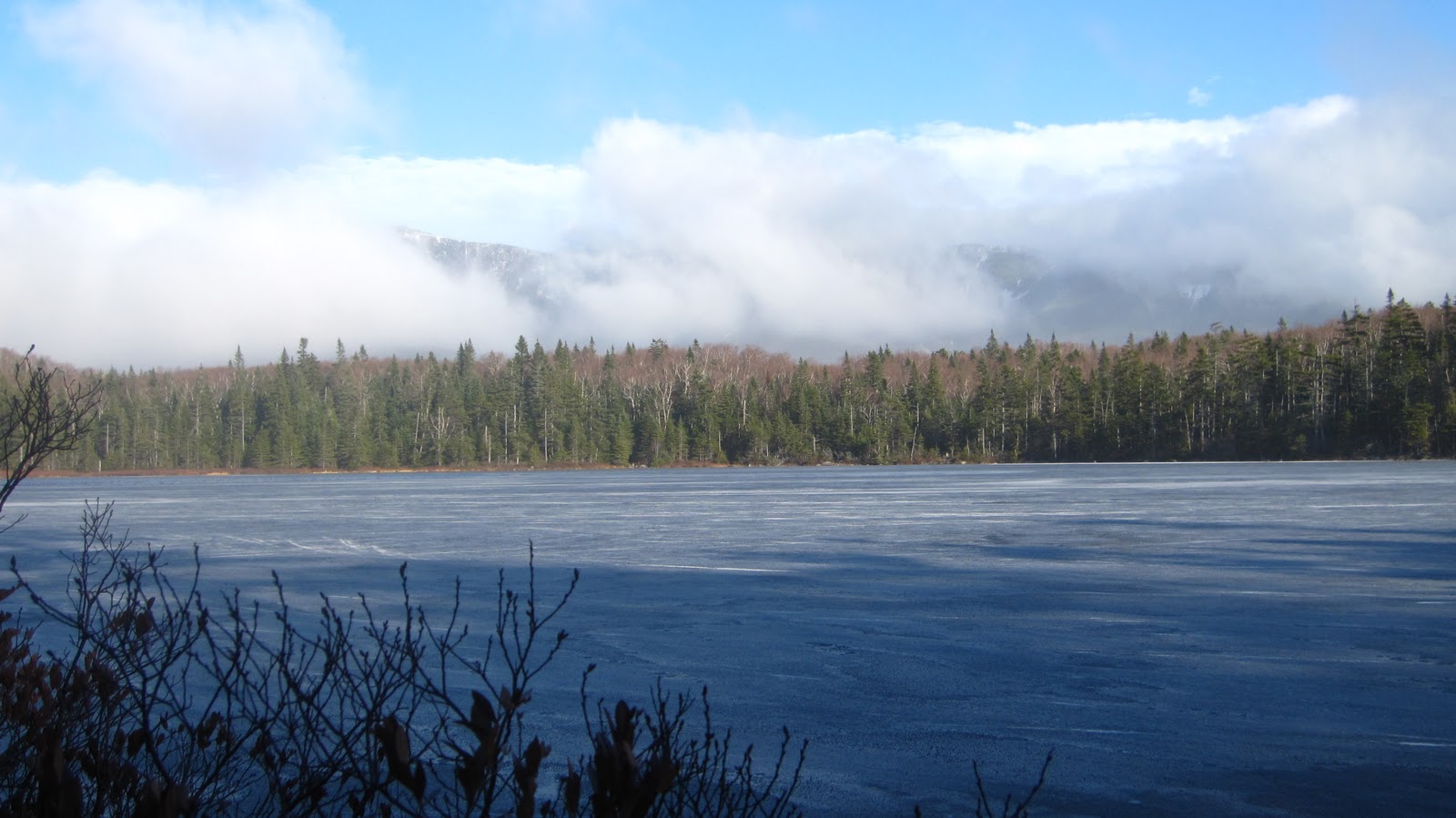
Lonesome Lake with a glimpse of the ridge!

We pass Lonesome Lake under sunny snow-showers and watch snow eddies blow across the most frozen lake.    After a brief rest in the Lonesome Lake Shelter we cruise down the remaining 1.5 miles back to the cars.  It’s a relative short hike, but the constantly changing conditions make it rewarding.

Gear List (click links for more product info):
Black Diamond Sabretooth Clip CramponsKahtoola MICROspikes Traction SystemBlack Diamond Raven Ice Axe Gray, 55cmBlack Diamond Axe Protector Bd Orange, One SizeBlack Diamond Spike ProtectorBlack Diamond Guide Glove - Men's Natural, LPetzl Cordex Belay/Rappel Glove Tan, LBlack Diamond Trail Trekking Pole Cinnamon, One SizeFree Shipping on Orders over $50

Epic Fall Ridge Walk

The plan: drive to Stratton, ME the coolest way possible, set up camp some place chill, kick back for the night and hit the trail early for a traverse of the Bigelow Range.  The Bigelow Range is due north of Sugarloaf and is in fact where Sugarloaf was originally slated to be cut, however some civil engineers dammed up a river and created Flagstaff Lake where the base village was supposed to be.  This nixed the ski resort plans and they picked Sugarloaf instead, but I digress.  My point: Sugarloaf is awesome, so if the Bigelows were Plan A of that whole endeavor, they really must have something going for them.  I gotta check this out.  Details…


View Best Possible way to Sugarloaf / Bigelow Range in a larger map


The trip there could be 35 minutes faster but I figure as long as were gonna be in the car for 5 hours we may as well have a good view for nearly the entire way and take the scenic route: through and past the White Mountains and then dodge east into Maine, past Umbagog and Rangeley Lakes and finally through Stratton, ME, and into the Carrabassett Valley.


The hike itself is alleged to be one of New England’s “great ridge walks” according to 100 Classic New Hikes.  The idea is to ascend from the southwestern flank of the range, traverse east a ways and then descend along the southeastern flank.  From the bottom we’ll need to hike west along a dirt road back to the car but for not more than a mile or so.  I can hardly imagine being anything short of awesome.  Observe:


View Best Possible way to Sugarloaf / Bigelow Range in a larger map
Bigelow Range from the north with Sugarloaf in the semi-distant background.


Hopefully this gets under way next weekend.

Moosilauke

Here it is, short and sweet…

Moosilauke is a nice hike, not too challenging, but plenty substance for a solid day followed by some refreshments (which is exactly what we did, by the way).

The hike begins at the Dartmouth Outing Club lodge; getting from there to the correct trail head is mildly confusing due to high number of trails originating at that spot.  A good AMC map is helpful, here.  The first few miles are quick going, with little elevation gain, and a few pleasant stream crossings.  Shortly after you begin to gain any serious elevation (around 3000 ft.) you are treated to one or two south easterly vistas.  Around 4000 you encounter the only real steep part of the ascent, a series of tight switchbacks punctuated by notably wind-stunted trees.  Before long you emerge above the tree line.

I can’t say for certain, but it seems that the bald summit of Moosilauke is more a result of it’s exposure to the wind and jet stream weather than it’s height, a phenomenon common in many of the Whites’ higher peaks.  In fact, I find that this summit was remarkably similar to that of Washington and it’s neighbors: alpine meadows, scrub brush, scree and wind!  Fortunately there is no train station, parking lot or visitor center.  At the summit, the remains of a cabin provide discrete shelter from the wind; all that’s really left are a few corners of the foundation.  It was a beautiful day, and as a consequence it was crowded.  The views to the east are nice; Franconia Ridge is the most prominent and easily identifiable landmark.

After chillin’ at the top for a while we headed south west down the Carriage Trail; allegedly where the backcountry skiing is done.  The trail is comparable to the Sherburne Ski Trail leading down from Tucks, but a bit longer.  There’s no headwall but it looks like a solid option in the event that conditions elsewhere are unfavorable.  The walk down features a pleasant pine forest, is pretty easy and can be done very quickly.


View Larger Map